
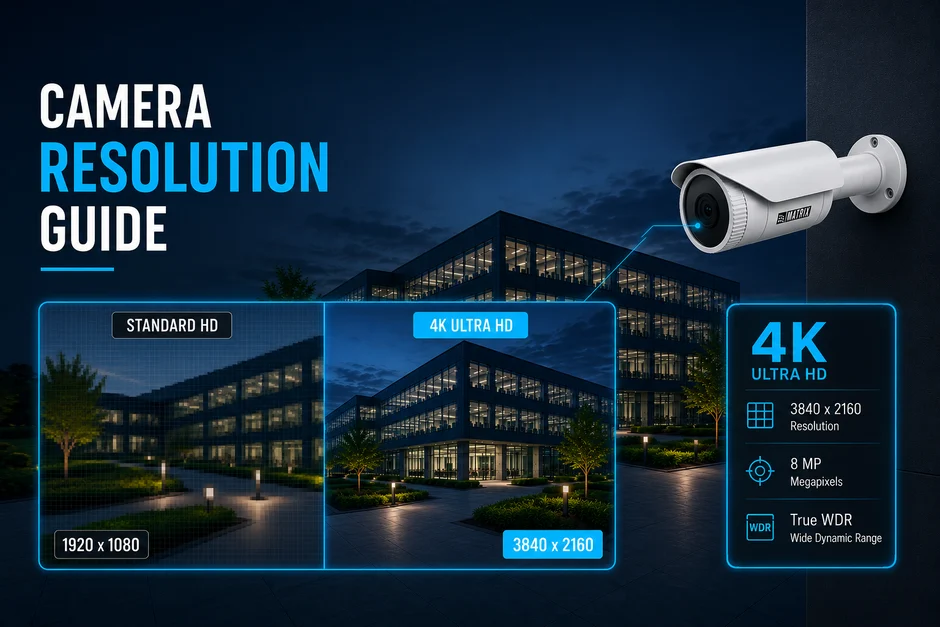
Many security leaders buy hardware for enterprise video surveillance. They choose devices based on high megapixel counts. Relying on raw numbers without a clear strategy is risky. It leads to blurry footage during incidents. These poor resolution choices cause high storage costs. They also lead to network delays. Reports show that 60% of firms struggle with high video storage costs.
What this means for you.
- Higher numbers do not always guarantee better safety.
- Wrong specs drain your IT budget and storage.
- Smart planning ensures you capture usable evidence every time.
This camera resolution guide helps you match hardware. It aligns with your specific enterprise safety goals. Following these steps helps you balance image clarity with daily speed.
What Do Different Camera Resolutions Mean for Your Enterprise?
Low-resolution footage leaves safety teams with grainy images. They fail to spot offenders. This creates a large risk during audits. Upgrading to high-resolution IP cameras ensures you capture key details. It makes sure your enterprise video surveillance captures the evidence you need. Pixel count describes the total number of pixels forming an image. Higher counts deliver clear views and vivid colors. This allows you to zoom into details, like faces or license plates. The feed does not become blurry.
| Resolution Name | Pixel Dimensions | Total Pixels | Image Detail Level. |
| 2MP (Full HD) | 1920 x 1080 | 2.07 Million | Standard clarity for small spaces. |
| 3MP | 2048 x 1536 | 3.14 Million | Extra detail for indoor tracking. |
| 5MP | 2592 x 1944 | 5.03 Million | Outstanding detail |
What This Means for You. Modern systems must balance these clear images with security camera storage requirements. While 5MP cameras offer great detail, they also need more bandwidth. Matrix high-resolution tools provide the speed needed to protect your property. This keeps daily work simple.
Align Resolution with Surveillance Goals.
Are you struggling with grainy footage? Does it fail when you need it most? Investing in high detail without a clear plan leads to wasted storage. This is a common hurdle in enterprise video surveillance. Proper planning reduces storage costs by up to 30%. The DORI standard helps you select the right camera resolution. Match details based on distance. It identifies how many pixels are needed for specific outcomes.
- Detection: Use the lowest pixels to confirm a person is present.
- Recognition: Need higher pixel density to see if you know the person.
- Identification: Demand top detail to provide evidence for police.
How to Use the DORI Standard for Better Accuracy?
- Find the distance between the camera and the main safety zone.
- Use 2MP cameras for simple detection in small office spaces.
- Deploy 5MP or 8MP cameras for identification in high-traffic public areas.
- Choose pixels that support AI video analytics resolution rules for smart alerts. High-traffic zones like entrances need the most detail. If you cannot see a face clearly, the footage is useless. It will not help the police.
What This Means for You. Matrix tools prioritize clarity to ensure your footage is useful for audits. Matching detail to your goals saves time. It reduces risk and simplifies daily work. It ensures your system works when it matters most.
Step 2: Assign Resolutions to Specific Facility Zones.
Are you tired of grainy footage that fails to find intruders? Using the wrong detail in key areas creates safety gaps. This leaves your property exposed. This mistake turns costly enterprise video surveillance into a risk.
| Facility Area | Suggested Pixels | Safety Goal. | Form Factor. |
| Entrances and Exits | 5MP High-Resolution | Face Identification | IP Camera. |
| Warehouse Floors | 5MP Detail | Monitor Broader Range | IP Camera. |
| Retail/Office Hallways | High Definition | Discreet Tracking | Dome IP Camera. |
| Business Premises | 2MP to 5MP | Deter Crime and Evidence | IP Camera. |
Which Zones Require the Most Detail?
- High-Traffic Entrances: Use 5MP cameras to capture millions of pixels. This ensures you can identify faces and small details for legal evidence.
- Large Stores: Higher resolution allows you to monitor a broader range of floor space with fewer units.
- Parking Lots: Deploy high-resolution sensors to capture license plates and vehicle colors.
- Discreet Hallways: Install Dome IP cameras. Their shape makes it hard to see where the lens is pointing.
What This Means for You. Upgrading to Matrix high-resolution tools ensures every detail is captured. This modern setup makes your CCTV more efficient. It helps police during audits. Better clarity leads to faster responses and a safer space for your firm.
Evaluate Infrastructure and Compliance.
Is your network ready for high-definition data? While following a camera resolution guide helps you pick the best sensors, your system must handle the load. High-resolution streams increase bandwidth use across your enterprise video surveillance network.
Can Your Network Handle the Load?
Bandwidth Needs: 4K surveillance cameras need more data than standard units. Ensure your cabling and switches can support these higher speeds without lagging.
NVR Throughput: Your Network Video Recorder must manage the data from multiple high-resolution cameras.
Storage Space: Better pixels create larger files. Plan for enough disk space to meet your retention rules.
Is Your Data Secure and Reliable?
Compliance: Choose tools that meet NDAA and GDPR rules. This protects your data and ensures you follow the law.
Built to Last: Matrix hardware offers a Mean Time Between Failures of 100,000 hours. This ensures long-term uptime for your site.
Unified Control: Modernize your setup by choosing security cameras that integrate with a single management software platform.
What This Means for You. A high-resolution system is only as strong as its weakest link. By matching your setup to your camera quality, you avoid crashes and data loss. This balanced approach reduces risk. It simplifies your daily safety work.
Conclusion.
Following a camera resolution guide helps your enterprise video surveillance stay efficient. Match IP camera megapixels to your goals using the DORI standard. 4K surveillance cameras provide great detail for legal evidence. High pixels also increase security camera storage requirements and video surveillance bandwidth. This strategic approach reduces daily risk. Good plans keep your footage useful for court and audits. Pick the right pixels for each zone to avoid blurry images. Contact Matrix Comsec for expert help with your system today.
Frequently Asked Questions.
Does higher resolution always mean better safety?
High resolution offers more detail for identifying faces or small objects. However, better pixels do not always equal better safety. You must balance image quality with your network space. Large files need video surveillance bandwidth and costly storage tools. Without a proper setup, high resolution video may lag or drop frames. A stable system needs a mix of clear images and consistent recording.
What is the difference between 2MP, 5MP, and 8MP cameras?
The main difference involves pixel density and the total view. A 2MP camera works well for small rooms or hallways. 5MP sensors provide extra clarity for medium spaces. This 2MP vs 5MP vs 8MP cameras guide helps you choose. 8MP cameras, also known as 4K, offer four times the detail of 2MP models. They allow you to zoom into recorded footage without losing sharpness. Choose 8MP for wide outdoor areas.
How does resolution affect AI video analytics?
Modern AI analytics depend on high pixel density to function with precision. Tasks like facial recognition require sharp edges and clear contrast. Low resolution images cause errors in automated detection systems. Higher resolution ensures that software can identify unique features even in difficult lighting. Using 4K or 5MP cameras helps maintain high accuracy rates for your safety alerts.
Why Is Your Pixel Plan Vital?
Selecting the right camera resolution is a strategic choice for enterprise video surveillance. Prioritize high-quality evidence and risk reduction over basic technical specs. This ensures your footage remains useful for audits and legal proof.
What This Means for You. Upgrading to high-resolution sensors protects your business in 2026. Clearer images lead to faster incident resolution and better safety. Contact Matrix Comsec today for an expert talk on selecting the ideal security cameras for your site.