
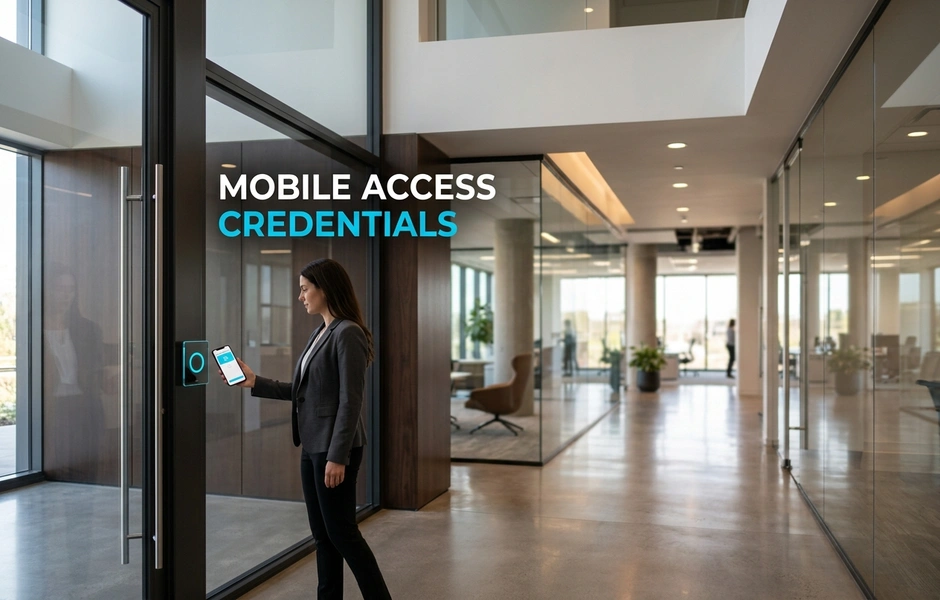
Traditional plastic access cards create ongoing expenses, constant administrative overhead, and frustrating entrance delays. Facility managers spend hours provisioning physical badges that employees frequently misplace, forget, or break. Every lost card incurs replacement fees and leaves security gaps until administrators revoke permissions.
Furthermore, slow card scans at turnstiles cause morning congestion in busy lobbies. Transitioning to modern mobile access control resolves these operational bottlenecks completely. Deploying secure BLE access control credentials alongside dynamic QR codes delivers fast digital onboarding to smartphones. Digital credentials reduce plastic waste, support sustainability goals, and allow remote updates across facilities. Let us now examine the primary hidden costs of physical badges.
How Do Mobile Access Control Credentials Actually Work?
Mobile access control converts a user smartphone into a secure digital key. Central software encrypts identity data and transmits it wirelessly to wall readers.
Here is how the credential process operates:
- Provisioning: Security teams issue digital keys over the air to a smartphone app.
- Transmission: The phone sends encrypted data via wireless signals when approaching a door.
- Verification: Readers validate credentials and unlock doors instantly.
Centralizing this workflow eliminates plastic badge printing costs. It speeds up onboarding while keeping access logs compliant with regulations like CCPA.
What Role Does Bluetooth Low Energy (BLE) Play in Hands-Free Access?
Bluetooth Low Energy enables communication between smartphones and readers up to several meters away. Using BLE credentials, employees enter turnstiles hands-free without removing phones from pockets.
Key operational benefits include:
- Reduced lobby congestion during peak hours.
- Zero physical contact with shared hardware.
- Encrypted long-range signals for executive entrances.
How Does QR Code Access Control Simplify Visitor Management?
A QR code access control system generates encrypted visual codes for temporary guest entry. Visitors receive time-bound codes via email without downloading extra apps.
Key operational benefits include:
- Instant arrival for contractors and delivery drivers.
- Automatic revocation after designated site visits.
- Seamless multi-site tracking across time zones.
What This Means for You: Deploying modern hybrid BLE and QR credentials simplifies administration and cuts infrastructure overhead.
BLE vs. QR Code Door Access: Which Should You Choose?
Choosing between BLE and QR code credentials depends on your priorities: security, hardware budget, and user experience. BLE credentials offer long-range entry with AES 128/256-bit encryption. This mechanism protects urban corporate hubs against signal cloning. Conversely, QR code access control uses dynamic visual codes that lower hardware costs and simplify offline deployments.
Here is how these two technologies stack up across key operating criteria:
- Security: BLE delivers enterprise-grade encryption. QR codes rely on time-bound visual tokens.
- Hardware Cost: BLE requires specialized smart readers. QR readers offer lower upfront hardware costs.
- User Experience: BLE allows continuous, hands-free entry. QR codes require scanning phone screens directly.
- Deployment Speed: BLE excels in permanent employee provisioning. QR codes instantly onboard temporary guests.
When Is BLE Access Control the Right Choice?
BLE is ideal for high-security environments and high-density workplace locations across corporate networks. It allows employees to walk through security checkpoints without touching devices.
Best use cases include:
- Main entrance turnstiles in urban high-rises.
- Hands-free parking gates and executive suites.
- High-security zones holding sensitive data.
The core advantage lies in secure communication protocols. Encrypted BLE signals prevent credential cloning, ensuring reliable access control across enterprise facilities.
When Does a QR Code Access Control System Make Sense?
QR codes excel in fast-paced visitor settings where minimizing reader overhead is essential. Administrators send dynamic visual codes via email without forcing app downloads.
Best use cases include:
- Industrial sites and suburban logistics hubs.
- Coworking desk bookings and flexible office suites.
- High-volume visitor reception desks.
Lower hardware investments make QR credentials very cost-effective. They operate offline reliably, reducing total cost of ownership across facilities.
What This Means for You
Deploy BLE for permanent employees seeking seamless entry. Assign dynamic QR codes to temporary contractors and daily visitors. This balanced approach minimizes overhead while maintaining workplace security. Next, we explore credential lifecycle management.
What Are the Strategic Advantages of Ditching Plastic Badges?
Ditching plastic badges delivers immediate operational speed, stronger privacy compliance, and lower environmental waste. Transitioning to mobile access control allows organizations to manage physical security digitally across multiple facilities without shipping physical cards.
Key strategic advantages include:
- Multi-Time Zone Administration: Security teams instantly provision or revoke credentials for hybrid workers across nationwide time zones.
- Data Privacy Compliance: Digital credentials eliminate visible personal details from physical badges. Centralized logs support state privacy mandates like CCPA and VCDPA.
- Corporate Sustainability (ESG): Removing single-use plastic cards reduces landfill waste, directly supporting LEED certification goals and corporate sustainability targets.
Old System vs. Modern System
- Plastic Badges: High replacement costs, physical security risks from lost cards, slow manual distribution, and ongoing administrative overhead.
- Mobile BLE Credentials: Instant digital issuing, automated audit trails, touchless entry using everyday smartphones, and centralized policy management.
How to Transition to Mobile Access Control
- Audit existing door controllers and identify upgrade requirements for your facilities.
- Select reader hardware supporting both BLE access control credentials and dynamic QR options.
- Deploy centralized software to automate digital credential issuing across all enterprise locations.
What This Means for You
Moving away from plastic reduces badge overhead, lowers operating costs, and boosts overall security. You streamline employee onboarding while eliminating physical card waste across your facilities. Upgrading your access system protects sensitive data, cuts administration hours, and scales seamlessly across nationwide locations.
How Do You Implement a Hybrid Mobile Access Strategy?
Implementing a hybrid mobile access control strategy requires a phased roadmap. Organizations must modernize credentials while maintaining daily workplace continuity. You start by evaluating current doors, controllers, and software integrations. Next, install multi-technology hardware handling legacy RFID alongside modern BLE access control credentials and QR codes. Finally, transition users to digital onboarding and sunset physical cards.
This approach solves operational friction. Managing legacy plastic badges wastes administrative time and increases security risks. Lost or stolen cards expose facilities to unauthorized entry. A hybrid deployment eliminates these vulnerabilities without forcing an abrupt, expensive rip-and-replace project.
Here is the step-by-step roadmap for your transition:
- Audit Infrastructure: Evaluate door readers, wiring, controllers, and HR software integration capabilities across facilities.
- Deploy Multi-Tech Hardware: Install IP-based controllers and readers supporting RFID, Bluetooth Low Energy, and QR codes.
- Automate Digital Onboarding: Issue mobile credentials remotely through email or apps, phasing out physical badge printing entirely.
What This Means for You
Unified IP platforms ensure long-term hardware reliability, seamless scalability, and compliant data handling. Distributed teams working across time zones receive instant access. Removing plastic badges lowers procurement expenses, simplifies audit logging, and supports corporate sustainability targets.
Smart hardware scales with your growth. Pay once, scale later.
By adopting a flexible credential framework, your organization remains secure, compliant, and ready for future facility expansions.
Ready to Upgrade to Mobile Access Control?
Transitioning to modern mobile access control using BLE credentials reduces operational overhead, enhances overall security, and aligns with corporate ESG goals. Replacing traditional plastic badges with digital credentials simplifies onboarding and eliminates physical waste across corporate facilities.
What This Means for You:
- Reduced ongoing administrative costs
- Faster provisioning for remote staff
- Enhanced central data security
Consult with a security specialist today to audit your access architecture and explore unified access control platforms.
Conclusion
Replacing plastic badges with mobile BLE and QR code credentials upgrades workplace security. Physical badges create high replacement costs, lost card risks, and slow lobby entry. Moving to mobile access control removes card printing fees and cuts plastic waste across your sites.
Bluetooth Low Energy delivers secure, hands-free entry for daily workers. Dynamic QR codes ease guest management without requiring extra app downloads. A hybrid mobile access approach lowers costs while keeping data secure and compliant.
To modernize your entry points, audit your current door hardware and controllers. Upgrading to mobile credentials protects site data, speeds up onboarding, and scales easily across all your sites.
Frequently Asked Questions
How secure are mobile BLE access control credentials compared to RFID cards?
Mobile BLE access control credentials use AES 128-bit or 256-bit encryption with phone biometric authentication. These features prevent credential cloning and sharing, offering stronger protection than physical RFID cards.
Can a QR code access control system work offline?
Yes, enterprise QR code access control systems function offline. The controller validates cryptographically signed or dynamic QR codes directly at the door without requiring active cloud access.
What happens if an employee loses their smartphone or battery?
Administrators instantly revoke mobile credentials remotely through management software. For dead batteries, hybrid readers support backup entry using PIN codes, temporary visitor QR codes, or physical badges.
How does mobile access control lower Total Cost of Ownership (TCO)?
Mobile credentials eliminate physical badge purchasing and card printer maintenance. They also reduce administrative labor for re-issuing cards. This transition cuts ongoing operational expenses for enterprise facilities.