
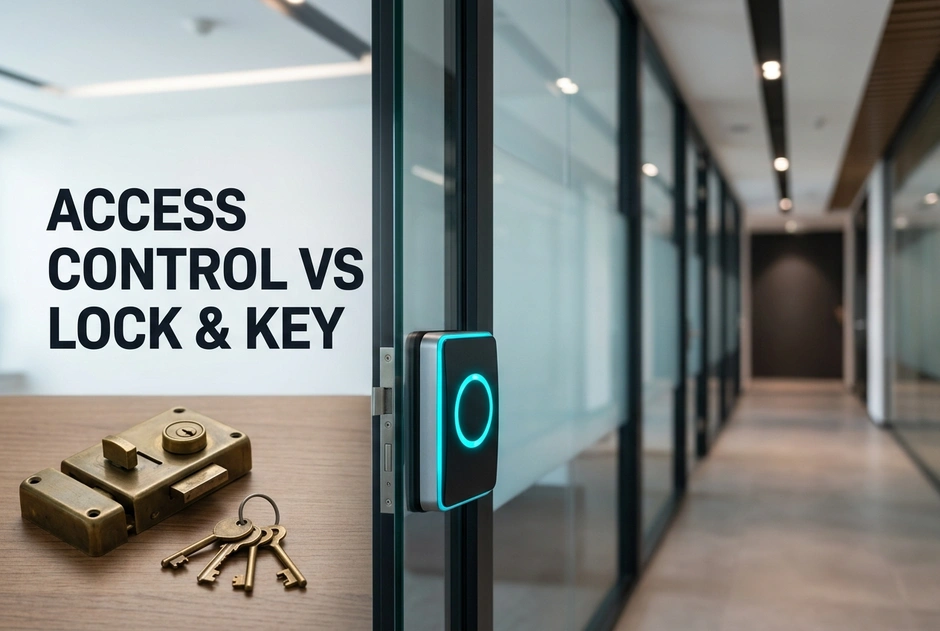
Traditional brass keys have clear limits in enterprises. They create blind spots about who used a door and when. Managing hundreds of doors manually becomes a nightmare as staff scales.
Electronic access control is a major upgrade for security programs. It replaces metal keys with digital credentials like cards, PINs, or biometrics. Security teams change access rights from a central system. They do not need to change physical locks. This approach also creates detailed event logs for internal audits.
Why do traditional keys struggle today? They lock but do not think. A lost or copied key is hard to track. Changing locks and handing out new keys is slow. During that time, security remains uncertain.
Electronic access control solves these issues. It centralizes credential management. Administrators update or remove permissions from a single dashboard. This removes the need to collect physical keys from departing staff.
What this means:
- Lower risk: Revoking a digital credential reduces unauthorized entry.
- Reduced costs: Fewer physical locks changes lower maintenance work.
- Better compliance support: System logs show access history for standards like HIPAA and PCI DSS.
- Operational efficiency: Management tools support many locations from one platform.
Making the switch works best with a clear plan.
- Audit every door in your current environment.
- Identify high-traffic and high-risk zones first.
- Deploy a scalable, centrally managed platform.
When modernizing, enterprises compare hardware-centric and software-centric options. Many review platforms that link access rights to user roles.
A good physical security strategy connects access control with other business systems. Insurers often view certified electronic systems as a sign of lower risk. This improves the long-term value of your investment.
Multi-site enterprises often use a hybrid approach. They deploy advanced electronic systems at critical locations. These systems may include biometric door controllers. Enterprises keep mechanical cylinders at lower-risk doors to balance budgets.
Let us examine how these two approaches perform in daily operations.
Why Is the Traditional Lock and Key Failing Modern Enterprises?
Mechanical locks are static, unmonitored, and vulnerable. The debate of access control vs lock and key highlights a vital shift. enterprises are moving from passive barriers to active, smart security management.
What Are the Hidden Costs of Rekeying?
Physical keys carry major financial burdens. When staff leave, enterprises face high locksmith fees. This creates constant risks of key duplication and lost asset control.
How Do Physical Keys Compromise Audit Trails?
Metal keys offer zero operational visibility. They leave no digital footprint of who entered a room or when. This lack of logs complicates investigations. It also increases liability. Unlike electronic systems, keys provide no data. Passive keys invite serious risk.
What Are the Core Electronic Access Control Benefits?
Modern systems offer key electronic access control benefits. These include real-time authorization, centralized oversight, and flexible scaling. Digital systems adapt quickly as your needs change. Detailed logs support audits and help align with security frameworks.
What this means for you:
- Enhanced security: Fast credential changes and clear event trails.
- Lower costs: Less frequent lock changes and simpler onboarding.
How Does Centralized Management Solve Multi Site Security?
Matrix provides unified multi-site control. Administrators manage user rights across locations from a single console. Using Matrix, enterprises minimize reliance on mechanical keys. They move most access control to digital credentials.
What Are the Biometric Door Controller Advantages in High Security Zones?
Biometric door controllers offer stronger identity assurance at each entry point. Multi-factor authentication combines biometrics with PINs or mobile tokens. This secures high-risk areas better than single-factor methods. Matrix supports these options to strengthen your physical security strategy.
Next, we analyze total costs.
How Do Enterprise Access Management Solutions Compare?
Enterprises must balance control with simplicity. Traditional keys do not create auditable access logs. This gap increases compliance and security risks. Electronic access control benefits include event logging and centralized policy management. It also makes credential updates easier. These features help teams monitor access across many sites. They support broader physical security strategy goals. Many enterprises pair card-based systems with biometric door controllers. This adds stronger identity assurance at critical doors. Moving away from physical keys streamlines daily operations. It reduces the impact of lost keys. You gain clear visibility into who accessed each area.
What this means for you:
- Lower operational risk: Fewer lock changes and site visits.
- Better compliance: Consistent audit trails that support reviews.
- Scalable security: Central control over multiple facilities from one platform.
Why Choose a Unified Stack Over Fragmented Hardware?
Many brands offer point solutions that need custom integration. Some vendors focus on devices. Others focus on software. Mixing these parts increases design and deployment effort. Matrix provides an integrated hardware and software ecosystem. Using a unified stack like Matrix reduces integration complexity. It lowers the total cost of ownership. It also reduces the risk of disruptions.
How Do Compliance and Cybersecurity Standards Differ Across Brands?
Security and IT alignment vary across vendors. Some platforms use open, server-based designs. Others began with video first and added access features later. Matrix follows a cybersecurity-focused design approach. When building your physical security strategy, look for alignment with local regulations. Choose products that publish clear cybersecurity practices. They should support regular updates to reduce vulnerabilities. Next, we review deployment steps for a smooth transition.
What Is the Real World ROI of Transitioning to Electronic Access?
Physical keys create hidden, recurring costs. Keys are easy to copy or misplace. This forces enterprises to change locks over time. These actions raise long-term spend. They weaken your physical security strategy. Modern electronic access control benefits enterprises by shifting to digital credentials. These are easier to manage and revoke. Your team updates permissions from a central interface. This cuts manual work and lowers operational risk.
- Old System: Ongoing key handling effort, limited insight, and slow response to change.
- Modern System: Central credential control, event logs, and faster updates to access rights.
How Do Insurance Premium Discounts Offset Initial Costs?
Some insurance carriers offer premium discounts for integrated, monitored access systems. Actual discounts vary by insurer and policy. Electronic access supports risk reduction by improving control. Detailed access records help show consistent security practices to underwriters. Many vendors focus on hardware alone. A unified approach links access control, monitoring, and reporting. This provides the structured data insurers review when assessing risk.
How Does Role Based Access Simplify Regulatory Audits?
Electronic tracking and role-based access support compliance in retail, healthcare, and public safety. Centralized logs reduce manual record-keeping. They make it easy to show who accessed each area. This helps during audits by giving clear, time-stamped evidence. Matrix delivers audit-ready compliance with an integrated platform. Its portfolio includes enterprise access management and biometric door controllers. These help align access rights with job roles.
What this means for you:
- Better support for insurance risk reviews.
- Faster, clearer compliance reporting.
- Reduced reliance on physical lock changes.
Next, we will analyze deployment timelines to help your enterprise transition smoothly.
Frequently Asked Questions
Can electronic access control systems integrate with existing video surveillance?
Yes. Modern systems link electronic doors directly to video feeds. Matrix unifies access control, time-attendance, and cameras into one physical security strategy . This simplifies enterprise access management.
What happens to electronic doors during a power outage?
Enterprise doors use fail-safe or fail-secure locks. Fail-safe doors unlock automatically for safety during power loss. Fail-secure doors remain locked to protect assets. Both setups use battery backups. Local databases in biometric door controllers ensure systems remain secure.
How do mobile credentials compare to physical key cards?
Mobile credentials use smartphones via Bluetooth or NFC. They eliminate physical cards and reduce key loss risks. Matrix provides open, electronic access control benefits . These include biometric door controller advantages and instant remote credential revocation .
Is it possible to maintain a hybrid security strategy during a transition?
Absolutely. A hybrid approach works well during a transition. Multi-state enterprises often deploy electronic access control at high-risk urban sites. They keep high-security mechanical cylinders at remote sites. This balances costs while meeting U.S. compliance standards like HIPAA.
Why Choose Electronic Access Control Over Traditional Keys?
The choice comes down to passive risk versus active protection. Traditional mechanical locks are passive and high-maintenance. They are easily compromised. In contrast, modern electronic systems offer real-time monitoring, automated alerts, and instant credential revocation.
These electronic access control benefits help secure distributed U.S. facilities. They help meet strict regulatory standards like HIPAA and PCI DSS. Matrix delivers a unified physical security strategy. This platform integrates biometric door controllers, visitor tracking, and telecom systems on a single network. Ultimately, modern electronic systems think while traditional keys merely lock. This transition shifts security from an administrative chore to a strategic business asset.
What This Means for You
- Reduced Risk: Instantly revoke user access nationwide without the high cost of changing physical locks.
- Lower Insurance: Qualify for commercial premium discounts by maintaining detailed, auditable electronic access logs.
Are you ready to modernize your enterprise access management? We invite you to evaluate your current security posture. Identify critical gaps. Explore how a unified, compliant architecture can protect your assets. It can also streamline compliance reporting. Contact us today to build a smarter physical security strategy. This drives overall enterprise efficiency.
Conclusion
The choice between access control vs lock and key is clear. Old keys create huge security blind spots and high lock-changing costs. In contrast, electronic access control benefits enterprises by centralizing how you run doors. This shift lowers risk and helps you meet strict rules. You can revoke access instantly and track entries automatically. Also, biometric door controllers stop card cloning in high-risk zones. Using these systems is a smart physical security strategy that saves money.
To secure your site, you must take action now. First, audit your physical doors. Second, find your high-traffic zones. Finally, set up a scalable enterprise access management platform. This change ends the headache of lost keys. You will no longer worry about unmonitored entry points. It keeps your business safe, compliant, and efficient.