
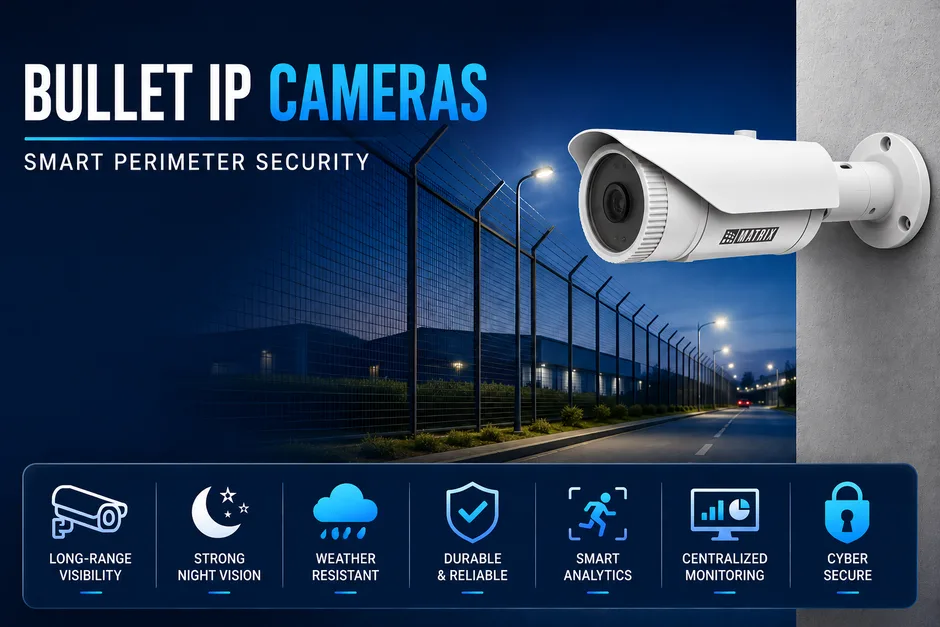
Perimeter security is often the softest target. Long fence lines, mixed lighting, and patchy staffing create blind spots that smart intruders exploit. Old CCTV setups make this worse. Scattered DVRs, low detail, and no centralized monitoring mean slow decisions and weak evidence.
Modern bullet IP cameras change that. Their long-range views, fixed direction, and weather-hardened housings suit factory gates, loading bays, and remote yards. When tied to a secure VMS, control rooms see incidents in real time and can prove what happened later.
Matrix adds an engineering-first, India-built, cyber-secure approach that sets a practical benchmark for serious perimeter projects.
What Exactly Are Bullet IP Cameras and How Do They Work?
Bullet IP cameras are network-connected, cylindrical security cameras often used for targeted outdoor views. They help cover areas such as fence lines, gates, and approach roads where you need clear, directional monitoring.
Inside each unit, you typically find:
- Image sensor paired with a fixed or adjustable lens
- Infrared LEDs to support many low light scenes
- Weather-resistant housing, often with a basic sunshield
- A network interface that can support PoE for power and data
- Processor for video compression and on-camera functions
With IP connectivity, one cable can carry power and data where PoE is used. Teams can adjust settings remotely, update firmware, and align devices with basic IP surveillance cybersecurity best practices.
How Do Bullet IP Cameras Differ from Traditional CCTV?
Older analog CCTV setups often relied on:
- Coaxial cables running into a local DVR
- Resolution limited by analog standards
- Mostly passive recording with few built-in analytics features
Modern IP-based setups typically use:
- Network cabling into an NVR or centralized monitoring with VMS and IP cameras
- Digital video that can support higher detail and flexible storage
- On-camera or server-based analytics that can assist with alerts
This shift can support faster incident review and clearer video, which helps audits and investigations.
Where Do Bullet IP Cameras Fit in a Modern Security Layout?
Typical placements for bullet IP cameras include:
- Perimeter boundaries and compound corners
- Vehicle entry and exit points
- Loading zones and site edges
- Long approach roads to important facilities
In many sites, bullet IP cameras are combined with other camera types. This helps create layered coverage for outdoor surveillance, which is often part of a broader plan for cyber-secured video surveillance for businesses.
Why Are Bullet IP Cameras So Effective for Perimeter Security?
Long, exposed boundaries are hard to watch. Fence lines, approach roads, and loading bays often sit in low light.
Bullet IP cameras pair a focused field of view with long range. You gain earlier detection of movement along the edge of your site.
Key advantages for perimeter use:
- Cylindrical shape that points cleanly along fences and corridors
- Lens options that tune coverage from entry gates to long compounds
- Built‑in infrared that helps retain usable detail in low light
This helps reduce blind spots and supports consistent coverage of critical edges.
How Do Bullet IP Cameras Handle Real-World Outdoor Conditions?
Rain, dust, and cold can damage weak hardware. That leads to missed events and unplanned repair costs.
Many outdoor bullet IP cameras for businesses use:
- Weather‑resistant housings, often tested to common IP66 or IP67 levels
- Metal bodies with sunshields to limit glare and heat
- NEMA-coated enclosures for corrosion resistance
- Optional heaters or fans in models built for harsh climates
What this means for you:
- Fewer camera outages across distant perimeter locations
- Fewer site visits for basic maintenance tasks
- More stable video coverage for security planning
How Do Analytics Improve Perimeter Monitoring?
Old system: guards stare at the walls of video. Important events hide in constant motion.
Modern analytics create a virtual perimeter:
- Line crossing rules on fence tops or gates
- Intrusion zones around warehouses, parking areas, or yards
- Loitering alerts near sensitive doors or loading docks
Combined with centralized monitoring with VMS and IP cameras, these tools can reduce manual review and help teams focus on higher‑risk events.
Why Choose Bullet IP Cameras for Outdoor Surveillance?
Many sites still mount indoor cameras on perimeter walls. The result is fogged lenses, washed-out images, and failed evidence. Bullet IP cameras are built for harsh outdoor conditions.
They give:
- Focused views along roads, fences, and alleys
- Strong night vision for early detection
- Housings that survive rain, dust, heat, and cold
You pay once, then rely on consistent footage.
What Features Should You Prioritize for Outdoor Use?
Look for:
- High resolution to identify faces and number plates
- Long IR range for low-light yards and parking areas
- WDR to handle glare from headlights and glass
- IP66 or IP67 rating for heavy rain and dust
- Vandal resistance to handle impacts and tampering
- Wide temperature range for coastal, hot, or icy sites
Ask vendors for test reports and compliance documents.
How Do Matrix Bullet Cameras Set a Practical Baseline?
Matrix designs and tests cameras in-house for 24/7 duty. Engineering focuses on reliability, not only headline specs. This gives predictable results across varied climates and regions. Instead of mixing brands and ratings, you pick a tested baseline and scale calmly.
How Do Matrix Cyber Secure Bullet IP Cameras for Businesses Help?
Matrix develops its bullet IP cameras with attention to hardware, firmware, and lifecycle controls. This supports consistent behavior and easier oversight.
Common security capabilities can include:
- Mechanisms that help prevent loading of altered firmware
- Options for encrypted video streams and control traffic
- Access controls that can be aligned with site policies
This makes it easier to monitor, update, and document the camera environment.
When you evaluate bullet IP cameras for outdoor surveillance, cyber resilience should sit alongside image quality and durability.
Conclusion
Bullet IP cameras give you focused, long perimeter views, strong night performance, and housings built for harsh outdoor conditions. When tied into centralized monitoring with VMS and IP cameras, they turn scattered sites into one managed perimeter with shared rules, alerts, and reports.
Cyber secure bullet IP cameras for businesses close a major gap by treating cameras as IT assets, not isolated gadgets. Matrix extends this with aligned hardware, firmware, and VMS, plus an engineering-first, India-built approach that scales. And this is validated by GoI’s STQC certification.
The most practical next step is simple. Audit your current coverage and risks, then plan a phased upgrade to standardized, cyber-secure bullet IP cameras.
What’s the Next Step for Your Perimeter Security?
Modern perimeter security starts with clear outdoor coverage from bullet IP cameras, centralized monitoring with VMS, and strong cyber hygiene. The risk is waiting until a breach exposes blind spots, weak alerts, or hacked devices.
Map your perimeter, rate each zone by risk, and list coverage gaps. Then speak with a partner like Matrix to plan a phased, standards-aligned upgrade that you fully control.
Frequently Asked Questions
Where should I place bullet IP cameras around my perimeter?
Start with key access points such as gates, main doors, and vehicle entries. Add bullet IP cameras along fence lines, corners, and blind spots to cover long views. Protect loading bays, parking areas, and walkways where people or assets move. Use a simple risk map, mark high-value and high-traffic zones, then place cameras to remove gaps.
How many bullet IP cameras do I need for my site?
The number depends on perimeter length, lighting, and risk level. High-risk zones and wide entries often need more bullet IP cameras with tighter views. Start with a site survey and a basic coverage map. Mark every point that must be visible and at what detail, then size the camera count from that plan.
Can I mix my existing analog cameras with new bullet IP cameras?
Yes, many sites run hybrid setups during migration. You can keep analog cameras using encoders or hybrid NVRs, and add new bullet IP cameras where you need better detail. This works well if budgets are tight or cabling is hard to replace. A full IP move usually makes sense when most core areas already need upgrades.
How do I ensure my IP cameras are not hacked?
Follow simple IP surveillance cybersecurity best practices. Change default passwords, use strong, unique credentials, and remove unused accounts. Keep firmware updated and enable encrypted video streams where possible. Place cameras on a separate network or VLAN, then limit internet exposure. Choose cyber-secure bullet IP cameras for businesses that support secure boot, logging, and role-based access. Choose STQC-certified, ER-compliant IP cameras that meet industry standards.
What is the difference between NVR and VMS in a centralized setup?
An NVR is local hardware that records and stores video from IP cameras. It is ideal for single buildings or small sites. A VMS is a central software platform that manages many NVRs and cameras across locations. With centralized monitoring with VMS and IP cameras, you get one interface for live view, playback, alerts, and reports across your full perimeter.