
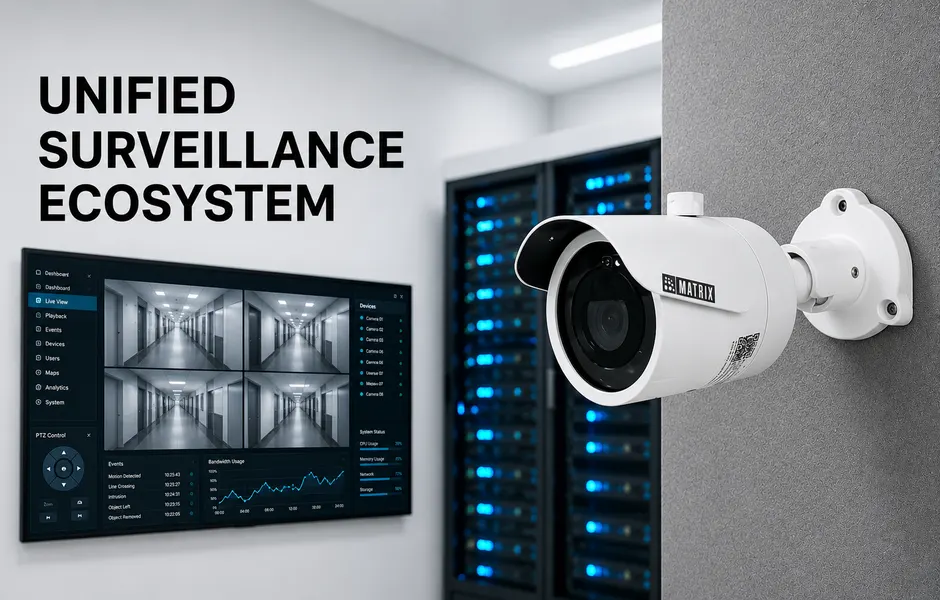
Many firms still treat security as a passive cost. Old setups rely on siloed hardware and point tools. When incidents occur, these split systems fail. They do not share data. This lack of linking creates blind spots across your assets.
The stakes are higher than ever. Threats move faster and use automation. Data volumes from lenses and sensors are massive. A “good enough” system is not enough. Outdated setups leave you open to leaks and downtime. If hardware cannot talk, your response is too slow.
You need a unified enterprise video surveillance ecosystem. This setup integrates IP cameras, NVRs, and VMS into one layer. It turns raw video into smart data. You move from slow recording to real-time awareness across each site.
Modern systems do more than watch doors. Use intelligent video analytics for facility management to optimize space and flows. A single dashboard ensures consistent protection. Apply video surveillance cybersecurity best practices from one screen, regardless of network quality or site size.
A converged platform makes this possible. Research shows that over 70% of enterprise video surveillance systems remain siloed. This leads to double the incident response times. Unifying video and access control reduces hardware lifecycle costs by up to 35%. Connecting your cameras, sensors, and access control cuts risks with automated alerts. You also lower costs through simpler maintenance.
Open designs help avoid brand lock-in. They also support data privacy goals and simplify setup.
To build this, you must understand the core parts. Let us look at the layout for a single, unified plan.
What Defines a Modern Surveillance Ecosystem?
Security leaders face a broken landscape. Isolated lenses create blind spots and slow down guards. This risk puts key assets in danger and raises costs. A modern enterprise video surveillance ecosystem Integrates all devices into one monitored network.
Modern setups focus on smart data flows. They reduce the need for closed hardware and use flexible, software-driven tools. This helps your system adapt as your firm grows. For high-safety sites, system uptime is a top priority.
The Core Components: IP Cameras, NVRs, and VMS
A unified system relies on three pillars. Each has a clear role in data flow.
IP Cameras: These are the eyes of your system. They send digital feeds from the edge. Today, many lenses run intelligent video analytics for facility management directly on the device.
NVRs: These are dedicated units for video storage. They receive feeds from cameras over the network. They organize footage and support user logins.
VMS: This is the control layer. The Video Management Software links feeds from cameras and recorders. It manages user rights and alerts from one dashboard.
In a mature setup, these parts connect with access doors, alarms, and sensors. This link cuts duplicate gear and eases daily work.
Open Standards vs. Proprietary Silos
Old systems lock you into one brand. This makes upgrades costly and setup hard. Modern networks use open, standards-based links.
Interoperability: Open links support multi-brand setups. You can view different lens types and sensors in one place.
Future-Proofing: Flexible layouts stop vendor lock-in. You can upgrade single parts without rebuilding the entire system.
Easy Lifecycle: Unified interfaces make it easy to manage updates and rules across many sites.
A strong network also uses video surveillance cybersecurity best practices. It treats cameras and NVRs as endpoints that need regular hardening.
A converged ecosystem replaces siloed, passive security with proactive, elastic coverage. Moving to a single platform saves time and lowers ownership costs.
Designing Your Enterprise Video Surveillance Architecture
Building a nationwide network needs more than hanging lenses. Many firms struggle with split systems. This creates gaps and wastes cash. You need a clear plan to link each site.
Follow these steps to design a strong layout:
Check network links: Balance fast office connections with slow rural links. Map your typical data loads and failure risks.
Use a hub-and-spoke model: This model is key for nationwide management. Regional hubs collect data and events from local spokes.
Set tiered storage: Keep local recorders for fast search. Send key files to central servers for backup and compliance.
How Should You Manage Bandwidth and Data Flow?
Video streams can overwhelm a standard network. If every lens streams at full size, other apps suffer. This creates friction between safety and IT teams.
Modern systems use adaptive bitrate streaming. These tools adjust video quality based on network health. They keep a clear view without clogging the network.
For sites with slow links, use scheduled syncs. The system stores high-quality video on the local NVR. It uploads the data late at night when traffic is low.
This step keeps your network fast while delivering clear video when needed. You can delay costly line upgrades at remote sites.
How Do You Build a Cybersecurity-by-Design Enterprise Video Surveillance Ecosystem?
Securing your feed is as vital as the video itself. Open cameras are easy entry points for hackers. Using video surveillance cybersecurity best practices is a core part of any enterprise video surveillance ecosystem.
Start with clear access rules. Limit who can view, copy, or manage specific feeds. A local manager should see only local cameras. Central staff can see the whole network.
Data encryption is a key guard. Protect data while it moves across networks and when stored. Align your safety checks with global standards.
Role-based access rules restrict internal data exposure. End-to-end encryption shields video streams from interception, while documented standards support legal and policy audits.
Choose brands that build safety into camera firmware and software updates. Open, documented links make it easy to connect with your IT audit tools.
Why Do You Need Intelligent Analytics?
Your system should do more than record. Using intelligent video analytics for facility management turns cameras into active sensors. These tools count users and spot unapproved movements.
Old setups require guards to watch every screen. Modern systems alert teams only when an event occurs. This reduces missed alarms.
This change helps your team focus on real threats, not raw video. It makes guards more efficient and provides data to optimize space.
How Intelligent Video Analytics Transform Facility Management
Is your team buried under useless video? Most systems record everything but show nothing until it is too late. Guards waste time searching through hours of footage. This leaves your site open to risks.
An ecosystem must act as a proactive brain. Running intelligent video analytics for facility management shifts tasks to smart code. These tools turn standard lenses into active sensors that trigger alerts.
Why Move Beyond Passive Recording?
Old systems wait for humans to spot a threat. Modern setups use object sorting to separate humans from cars. This ensures your team reacts to real alerts.
Occupancy Checks: Track real-time occupancy for safety codes.
Loitering Alerts: Spot users in restricted areas early.
Intrusive Entry Alerts: Set virtual lines that trigger alarms when crossed.
Object tracking reduces screening time by up to 80%. Instead of watching blank screens, your guards manage active events.
Unified Security and Communication Workflows
Real efficiency comes when video talks to your communication tools. A converged platform creates a single control layer. This breaks down silos that slow your response.
Consider how these automated steps speed up safety:
Spotting: A lens detects a trespasser in a closed zone.
Checking: The VMS sends the live feed to the manager.
Calling: The system starts a VoIP call to the guard on duty.
Locking: Access control locks adjacent gates.
Matrix Comsec provides a unified ecosystem. It combines video, access doors, and telecom tools. This single stack simplifies your entire IT network.
Managing a nationwide footprint requires a hub-and-spoke layout. You must follow local privacy laws. Use a VMS that applies site-specific retention rules automatically.
A single pane of glass cuts training costs and eases software updates across all locations.
Common Design Mistakes to Avoid
Building an enterprise video surveillance ecosystem is complex. Many managers fall into traps that weaken safety. These errors often come from a split approach to integration.
Are You Ignoring Regional Data Laws?
Nationwide firms must track diverse privacy rules. A common error is using one retention policy for all sites. This can break laws in strict areas.
Old setups rely on manual video deletion by local staff. Modern systems use VMS-driven, location-specific rules that run automatically.
Why Is Cheap Hardware a Risk?
Low-cost lenses lack update plans. Over time, these devices miss security patches. This creates gaps that violate video surveillance cybersecurity best practices.
Check vendor safety certificates and third-party audits.
Confirm regular firmware update cycles and patch releases.
Choose hardware that encrypts all data transfers.
Smart hardware choices protect data. They also cut replacement costs down the road.
Is Your System Built to Scale?
Many leaders choose locked systems that block growth. This forces a costly upgrade later.
The Trap: Buying closed, single-purpose hardware to save cash today.
The Solution: Use open, standards-based systems that grow in stages.
Do You Neglect Network Realities?
Ignoring network limits is a common slip. Remote sites need different streaming plans. Without adaptive bitrates, links fail during high-traffic times.
Are You Missing the Analytics Layer?
Saving video is no longer enough for complex sites. Skipping analytics wastes data. Running intelligent video analytics for facility management helps optimize your building’s space and flow.
Avoiding these errors cuts long-term costs. You gain a single system that speeds up response times and eases maintenance.
The Path Forward: Security as a Strategic Differentiator
Does your setup provide real business value? Split systems create gaps and slow down guards. Moving to a unified setup ensures total control. By linking video with access doors, you gain a single source of truth.
Centralization builds operational confidence.
Unified data simplifies compliance across sites.
Smart video analytics turn footage into business insights.
Modernizing reduces risk while easing daily tasks. Invest in a system that works for you. Check your layout against standards. Matrix Comsec offers a converged platform that unifies video, access, and telecom. Contact our team today to audit your setup and build a secure roadmap.
Conclusion
Building an enterprise video surveillance ecosystem is vital. Security leaders must move beyond passive recording. You need a unified strategy that connects IP cameras, NVRs, and VMS into one proactive shield. This centralized approach cuts data silos and reduces response times. By using intelligent video analytics for facility management, you transform raw footage into actionable insights. These tools help optimize space and improve safety across your footprint.
Data safety remains a top priority. Follow video surveillance cybersecurity best practices to protect your data. Use encryption and role-based access to secure your network. Choose open designs to keep your system flexible and avoid brand lock-in.
The most practical next step is to evaluate your current setup. Check your network limits and map your data needs. Moving to a hub-and-spoke model helps you manage nationwide facilities from a single screen. Matrix Comsec provides the converged platform needed to link video, access, and telecom. Start building your resilient framework today to protect your assets and people across every location.
Frequently Asked Questions
What is the difference between an NVR and a VMS in an enterprise setting?
An NVR is a hardware unit for local video storage. It is ideal for site-level use. Video Management Software (VMS) is centralized software that links many NVRs. VMS tools provide one screen for monitoring. This helps firms scale operations across multiple sites.
How do I manage surveillance across multiple sites with varying internet speeds?
Use a hub-and-spoke layout for split sites. Recorders buffer data at the edge to prevent video loss. Adaptive bitrates adjust quality to fit capacity. This keeps your WAN stable. You can also sync data late at night to avoid network load.
Can I integrate my existing third-party cameras into a new centralized ecosystem?
Yes, you can link existing cameras. Modern ecosystems use open standards like ONVIF for interoperability. This allows a mixed setup. You do not need to replace all gear at once. Matrix Comsec uses open layouts to simplify migration and manage costs.
Why is cybersecurity-by-design more important than just having a firewall?
Firewalls alone cannot stop every threat. Secure-by-design focuses on device hardening. This prevents backdoors that firewalls miss. Secure setups use role-based access and encryption. These steps help firms meet strict regulations and ensure data sovereignty.
How does video surveillance integrate with access control and time-attendance?
Converged platforms link video with access doors. A face recognition event can trigger many steps. It can unlock a door and log work hours. This cuts out separate systems, raises ROI, and provides a single source of truth.