Today, many firms rely on siloed tools. Unlinked tools fail to talk. This leaves gaps in your plans. When access control and video feeds do not share data, risks rise. Split tools are slow. They leave your assets at risk. Matrix offers an integrated security system. By merging sites on one hub, we help you shift to proactive care. Integrated security systems ease daily work and centralize control. This ensures your business stays secure. It cuts the work needed to manage many devices.
What Is Integrated Security System Setup?
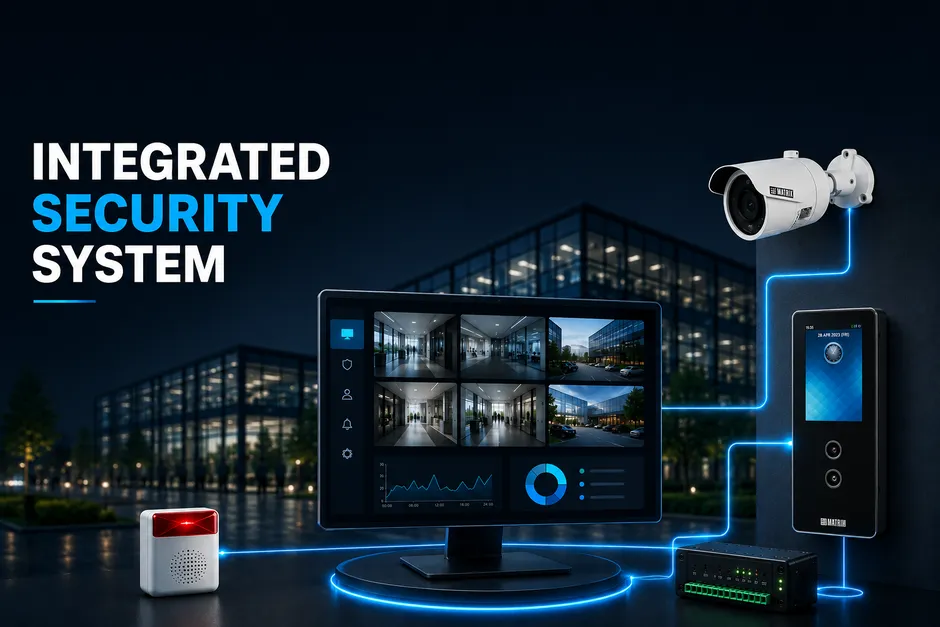
Integrated security systems act as a centralized security platform to unify your setup. Instead of managing alarms and locks in silos, this tool merges every part. High-quality enterprise security solutions let tools share data in real time. A typical setup combines video surveillance systems, digital access control, and wireless alarms to work as one. This setup cuts manual data entry and saves time. Studies show that integrated systems reduce crisis response times by 50%. You gain complete views from one dashboard to ease daily tasks. It strengthens defense and reduces the need for guard work.
What Are the Key Parts of an Integrated Security System?
Modern Integrated Security System setups require more than just standalone hardware; they demand a shared setup. Smart cameras, controllers, and unified software must work in sync to protect your site. Understanding these security system components is the first step to build a strong defense.
| Guard Tool | Main Function | Integrated Value | Firm Benefit |
| Video Surveillance | Visual tracking and recording | Links footage to access events. | Provides visual proof for every alarm. |
| Access Control | Controls entry to closed zones | Syncs with fire and alarm tools. | Runs quick steps during crises. |
| Fire Alarm System | Finds smoke or heat threats | Unlocks doors on its own. | Ensures quick, safe exits. |
| Audio Speakers | Sends warnings or alerts | Lets you react in real time. | Stops intruders early. |
| Alarm Systems | Finds perimeter breaches | Alerts units via central hub. | Cuts the need for manual patrols. |
| Software Tools | Gathers data from all devices | Creates a single screen for all tools. | Streamlines work and cuts costs. |
Access Control Integration
Smart controllers manage entry points and sync with employee files. This access control integration ensures that only authorized staff enter restricted zones. It also updates HR records on its own.
Video Surveillance Systems
High-definition IP cameras provide visual checks for every access event. These video surveillance systems flag relevant footage, saving teams from hours of manual review.
Fire and Alarm Synchronization
Linking fire alarms lets the system unlock exit doors during crises. This quick step removes the risk of human error when time is key. A unified system transforms passive hardware so you spend less time managing devices. This lets you focus more on growing your business.
How Does the Integrated Security System Setup Work?
Managing an Integrated Security System in silos creates blind spots. If cameras do not talk to alarms, your team must piece together incidents, which increases risk. This delay slows down your response, but integrated systems solve this by adding a unified software layer. This creates a single brain for your tools where a sensor or camera first identifies an event. Next, the device sends a signal to the platform, and the system triggers a response to stop the threat. For example, if a sensor detects an intruder, the system can lock nearby zones and point cameras at the breach. This tech reduces human error and ensures your plant stays safe 24/7.
What Are the Main Gains for Your Enterprise?
Operating with split hardware creates a heavy admin burden. When alarms, cameras, and locks work in isolation, teams waste hours cross-referencing data, leaving your site exposed. Modern integrated systems cut these silos to offer the clear benefits of integrated security. Centralized control lets you manage many sites from a single screen, which reduces the complexity of tracking diverse hardware. Reports show that unified systems reduce guard costs by up to 25%. Smart tools flag specific trends on their own so technology handles routine checks. By choosing enterprise security solutions, you move to proactive care and save money. You gain faster insights into your daily work.
How Do You Choose the Right Setup?
Selecting the wrong hardware leads to downtime and high costs. Split systems fail to talk, leaving gaps in your defense. To ensure your systems remain effective, follow three simple rules. First, prioritize reliability by looking for hardware with a Mean Time Between Failures of 100,000 hours. This ensures 24/7 work without repairs. Second, demand unified tech by choosing a provider that owns the tech stack to prevent compatibility issues between software and hardware. Third, verify compliance by ensuring all devices meet NDAA, GDPR, and BIS standards. These rules guarantee long-term data trust, and investing in integrated systems protects your firm from tech shifts. You gain a stable, compliant platform.
Conclusion
Moving from split tools to integrated security systems is essential for modern enterprise security. Siloed hardware creates blind spots and slows responses. By unifying access control and video surveillance, you gain a proactive platform. These tools reduce manual labor and lower business costs. Your site stays protected, gaining total visibility from a single centralized security platform. To safeguard your assets, you must choose reliable tools. Contact Matrix teams today to design your system.
Frequently Asked Questions
What is the difference between Integrated and unified setups?
Integrated systems connect distinct tools using APIs to allow different brands to talk to each other. In contrast, a unified setup is a single platform built from the ground up. It offers a unified view because every tool belongs to the same code. A unified setup simplifies daily work for modern enterprises, while linking provides more choices for mixing different hardware brands.
Can I integrate my existing legacy cameras?
You can often keep existing legacy cameras when upgrading. Modern platforms use NVRs to bridge the gap. Many tools also rely on ONVIF-compliant software to ensure support. This approach saves money and allows for a gradual transition to newer tech.
How does integration improve emergency response?
Integration improves response times through automated workflows. For example, a smoke detector can trigger sirens, unlock fire exits, and turn on lights. These actions happen without manual input from staff, meaning faster reactions help protect lives and reduce property damage.
Is an Integrated system more vulnerable to cyber attacks?
A well-designed system is not more vulnerable. Modern providers follow safe design rules by using encrypted links that meet global standards. Regular software updates help defend against new threats. Proper network splits also add a strong layer of protection for your firm.
Why Choose Integrated Security Systems?
Split protection creates gaps that put assets at risk. According to security surveys, 65% of enterprises plan to migrate to a centralized security platform by 2027. Modern tools solve this by unifying hardware to gain total control and improve response speed. This technology reduces manual labor. Matrix teams can design a compliant, reliable system for your needs, so contact us today to optimize your daily work.