Securing a modern building requires a clear plan. Many enterprises rely on separate systems and old rules. This leaves gaps in local and web shielding. Weak access control, guest entry, and legacy feeds expose your enterprise to rogue entry and data leaks. Legacy systems might work, but they do not think.
Let us compare the risks of old setups against modern, responsive systems:
- Old Setup: Disconnected alarms, door keys, and manual logs.
- Modern Setup: Integrated access control, IoT sensors, and smart feeds.
A layered security setup solves these gaps. It combines door controls, smart video feeds, and proactive shielding to keep your enterprise running.
You can reduce daily risks, protect your staff, and prevent data leaks. Upgrading your systems keeps your enterprise secure, productive, and compliant. Ready to shield your space? Speak with our team today to find the right platforms.
Why Is Workplace Security a Strategic Priority?
Many enterprises overlook how to boost office security until a major breach occurs. Leaving your real and data assets unprotected is a risky gamble. Workplace threats, theft, and non-compliance fines can ruin your enterprise overnight.
Office security is a smart choice. It protects your bottom line, keeps your people secure, and boosts daily output.
| security Domain | Traditional Vulnerability | Modern Strategic Solution | Business Outcome |
| Real-world security | Unmonitored access and threat risks | Smart access control and real-time sensors | Safer staff and higher employee confidence |
| Data Shielding | Unsecured Wi-Fi and lack of MFA | VPNs, firewalls, and strict MFA rules | Secure data assets and reduced breach risks |
| Regulatory Compliance | Failing to meet strict legal rules | Audited electronic access and video logs | Avoidance of massive non-compliance fines |
| Assets security | Costly site damage and stolen tools | Proactive IoT alarms and video analytics | Prevention of catastrophic financial losses |
Why Do You Need a Proactive Strategy?
Unsecured sites face high risks of theft and downtime. Ensuring employee well-being must always be the top priority. When staff feel secure, they focus better and remain productive.
Protecting sensitive data prevents financial losses. It also keeps your data assets secure from cyber threats. Meanwhile, maintaining rules helps enterprises avoid fines and reputational damage.
A secure space is a productive space. Implementing robust physical security in the workplace builds trust with your team and clients. Protect your enterprise by partnering with experts who deliver smart business security solutions.
What Are the Core Pillars of an Enterprise Security Strategy?
Siloed systems leave dangerous gaps. Managing separate keys, siloed feeds, and weak networks wastes time. It also increases your risk of real and web breaches. You can resolve these gaps by building your strategy on three unified pillars.
Old Setup vs. Modern Setup
- Old Setup: Disconnected alarms, door keys, and isolated networks.
- Modern Setup: Integrated access control, smart video feeds, and robust data shielding.
How Do the Three Pillars Work Together?
A complete security setup relies on layering. Each pillar addresses a specific gap to keep your employees secure. This ensures that a failure in one area does not compromise your entire facility.
- Access control: Manage entry points starting at your outer gate. Extend this real-world security deep into internal high-risk zones like server rooms.
- Video feeds: Use smart cameras to monitor activity in real time. These feeds provide visual proof and record evidence when alarms trigger.
- Data shielding: Protect your data assets from rogue access. Secure your wireless networks and implement strict MFA rules. This prevents bad actors from stealing data.
To maximize efficiency, look for unified platforms. These systems integrate all three pillars into a single console. This eliminates silos and allows your team to react faster. Always choose compliant tools that align with global rules to ensure long-term reliability.
Silos weaken your security. Unifying real and tech systems keeps your assets secure. A secure site also boosts employee confidence and output. If you want to learn how to boost office security, consult with an expert today.
Step-by-Step Guide: How to Improve Workplace Security?
Are your employees and assets truly secure? Fragmented systems leave blind spots. Follow these five structured steps to establish a modern, resilient, and fully integrated security network.
Step 1: Why Do You Need Intelligent Access Control?
- The Problem: Metal keys get lost, copied, or stolen. This leaves your main doors vulnerable.
- The Threat: If anyone can walk into your building, your staff and assets are constantly at risk. You cannot protect what you do not control.
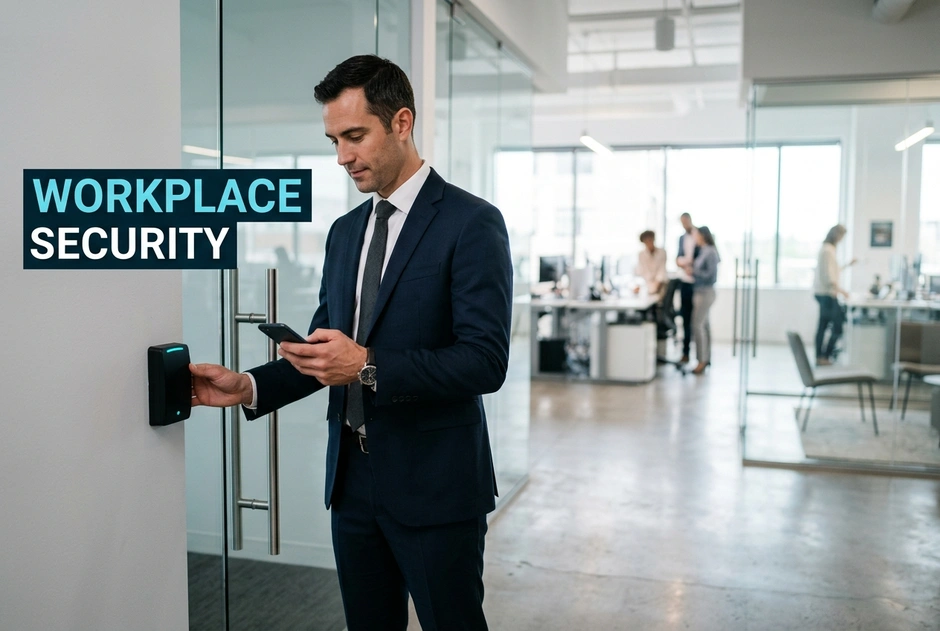
- The Solution: Secure all main entrances and restricted zones using robust door access control. Use modern passes like biometric readers, smart cards, or mobile access. Integrate access control with central management software. This lets you revoke lost cards instantly and block threats before they escalate.
- Old Setup: Metal keys and unwatched locks.
- Modern Setup: Mobile passes and instant cloud alerts.
You gain complete visibility over who enters your space. It works, but it also thinks.
Step 2: How Do Role-Based Access and Visitor Management Work?
- The Problem: Not every employee needs access to every room. Giving broad access increases internal risks.
- The Threat: A rogue person wandering into a server room can cause data loss or steal expensive gear.
- The Solution: Implement role-based access control to restrict sensitive areas. Use a guest management system to issue time-bound passes to guests. Review access logs frequently to audit user activities. These records provide clear evidence if a breach occurs.
- Old Setup: Paper logbooks and unrestricted internal doors.
- Modern Setup: Automated smart badges and strict role permissions.
You limit internal threats fast. Pay once, secure forever.
Step 3: Why Should You Link IoT Sensors and Alarms?
- The Problem: Guards cannot be everywhere at once. Hidden areas often remain unwatched.
- The Threat: Intruders and weather hazards can cause severe damage before anyone notices. Delayed reactions cost businesses thousands of dollars.
- The Solution: Install smart IoT sensors to detect motion, sound, and weather changes. Link sensors to smart locks and alarms to enable automated responses. Ensure teams receive instant alerts on mobile devices during off-hours. This means you do not have to pay for constant guards on site.
- Old Setup: Manual patrols and delayed alarm responses.
- Modern Setup: Connected IoT sensors and instant mobile alerts.
Your building reacts to threats in real time. Protect your space without invading employee privacy.
Step 4: How Do AI-Driven Video Feeds Protect You?
- The Problem: Standard cameras only record crimes after they happen. Teams get overwhelmed by hours of useless footage.
- The Threat: Reactive monitoring does not stop active intruders from stealing valuable assets. It only shows you what you lost.
- The Solution: Position high-performance IP cameras at strategic locations to deter intruders. Deploy smart video analytics to fast detect crowd formation, line crossing, and suspicious behavior. Select secure video hardware to protect your network from web tampering. These measures guarantee that your local cameras cannot be turned against you by hackers.
- Old Setup: Passive recording and manual video reviews.
- Modern Setup: AI-powered threat detection and secure hardware.
You stop clashes before they escalate. See everything and analyze threats instantly.
Step 5: How Can You Enforce Strict Network securitys?
- The Problem: Local securitys are useless if your web network is wide open. Hackers target weak Wi-Fi connections to steal data.
- The Threat: A single web breach can expose customer records and cost millions in compliance fines. Your reputation can vanish overnight.
- The Solution: Protect your corporate Wi-Fi by disabling SSID broadcasts and isolating guest networks. Enforce MFA and VPNs for all remote employees. Use robust firewalls to monitor and block malicious network traffic fast. These steps ensure your brand property remains safe from external cyber threats.
- Old Setup: Open Wi-Fi networks and simple passwords.
- Modern Setup: Encrypted VPNs, MFA, and hidden SSID broadcasts.
Your company data remains locked tight. Secure your web perimeter as tightly as your physical doors.
How Can You Build a Safer Office Today?
Building a safe enterprise requires continuous effort. Do not wait for a site breach to upgrade your shields. Our team designs scalable, integrated security setups tailored to your unique needs. Contact an expert today to shield your space, protect your people, and gain peace of mind.
How to Run an Office security Assessment?
The Problem: You cannot fix gaps you do not know exist. Hidden weak spots in your security leave real and data assets exposed.
The Threat: A single overlooked gap can lead to a devastating breach. This risks your proprietary data, compliance status, and employee protection.
The Solution:
Research shows that robust workplace security prevents rogue access in 99% of cases.
Reports show that learning how to improve workplace security reduces office clashes by 35%.
Studies show that following workplace security tips reduces theft by 40%.
Surveys indicate that using a workplace security checklist improves audit readiness by 50%.
Research shows that strict workplace cybersecurity shielding keeps data assets secure in 95% of cases.
Engage internal stakeholders to review clash response plans and evaluate existing hardware performance. Using a standardized checklist helps maintain compliance with global site rules.
| Audit Category | Audit Checkpoint | Target Compliance Metric |
| Access Control | Control access for employees and guests | Authorized entry only |
| Video Surveillance | Position active CCTV feeds at key locations | Real-time threat observation |
| Alarms & Sensors | Service and maintain real-time alarm systems | Instant alerts for gate staff |
| Wi-Fi Shielding | Secure and monitor private networks | Encrypted data communications |
| Data Shielding | Protect computer systems with tech controls | Multi-factor checks enabled |
| Employee Training | Train staff on clash reporting procedures | Frequent threat training completed |
Proactive audits ensure your office security remains airtight. You protect your people, reduce operational risks, and maintain audit compliance.
How to Boost Office Security for the Long Term?
Outdated systems leave your business vulnerable to modern threats. A strong office security plan is the foundation of enterprise continuity and employee well-being.
To stay resilient, you must implement continuous evaluation and modern, unified hardware. This strategy protects your team from both real and web risks.
- Protect your people: Build a lasting culture of trust.
- Secure your assets: Prevent rogue access before it happens.
- Ensure compliance: Avoid costly legal liabilities.
Do not wait for a breach. Consult a setup expert today to design an integrated, compliant, and future-proof security layout for your enterprise.
Conclusion
Securing your workplace requires a proactive, unified strategy. Old systems and fragmented shields leave dangerous gaps in your real and web perimeters. To protect your people and assets, you must combine real-world securitys with web shielding. Choosing an integrated platform like Matrix Comsec ensures a smooth setup.
A complete strategy relies on three core pillars. First, use smart access control to manage entry points. Second, set up video surveillance to monitor threats in real time. Third, enforce strict network securitys to secure your data assets. Together, these systems prevent costly breaches and keep your daily operations running smoothly.
Do not wait for a site breach to show your weak spots. The most practical next step is to run a thorough site audit. Find your gaps and talk to experts to design a scalable, integrated system. Upgrading your securitys builds trust with your team and ensures long-term business continuity. Contact our team today to protect your enterprise.
Frequently Asked Questions
What is the difference between real-world and tech security?
Real-world security protects your actual assets and staff from real world threats. It relies on tools like cameras, locks, and sensors to stop rogue entry. In contrast, tech security protects data assets, networks, and databases from remote attacks. Both systems are vital for a modern enterprise. While local measures secure your actual office, tech securitys keep your online data safe. Combining these strategies ensures complete protection for your workforce and your brand property in our highly connected work world.
How often should enterprises run security audits?
Organizations should perform comprehensive site audits at least once every year. You must also run these checks immediately after any major change to your facility or network. Regular reviews help you find new gaps before bad actors can exploit them. They ensure that your feeds, alarms, and software protocols remain fully effective. Staying proactive with these scheduled assessments keeps your security measures aligned with current risks. This simple practice helps maintain a safe environment for your entire team.
Why is compliance important when choosing office security platforms?
Choosing compliant hardware ensures your systems align with global compliance standards. These rules include regulations like GDPR, NDAA, and BIS. Compliance protects your enterprise from critical data gaps and severe legal liabilities. It also prevents costly fines from regulatory bodies. By selecting certified security tools, you prove that your company values privacy and ethical standards. This trust is crucial for your clients and partners. Ultimately, compliant systems build a much stronger and more reliable security for your enterprise.