
For months, the CCTV industry treated STQC certification and ER compliance like a moving deadline — something that could be extended or handled later.
That assumption is now over.
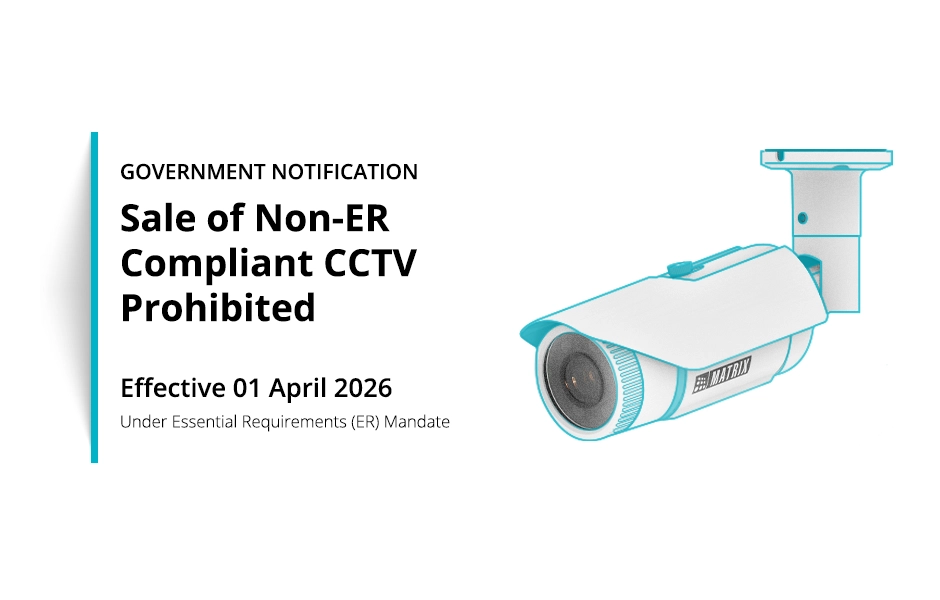
The Government of India (MeitY) has formally withdrawn the relaxation that allowed sale of certain non-compliant CCTV cameras and has clearly stated that from 01 April 2026 onwards, no sale of CCTV cameras not conforming to the Essential Requirements (ERs) will be allowed.
If you are planning to buy, specify, integrate, or expand video surveillance systems, this directly affects you.
| Year | Regulatory Update |
| 2023 | Government begins introducing cybersecurity-focused Essential Requirements (ER) for CCTV cameras |
| April 2024 | MeitY Gazette Notification brings CCTV cameras under the Compulsory Registration Order (CRO) |
| 2024–2025 | Industry given a transition period to clear non-compliant stock |
| April 2026 | Relaxation withdrawn — only ER-compliant and STQC-certified CCTV cameras can be sold |
1) What Exactly Is the Mandate?
STQC (Standardisation Testing and Quality Certification) is a certification framework under the Ministry of Electronics and Information Technology (MeitY) that validates whether electronic products meet the cybersecurity and technical requirements defined by the government.
For CCTV cameras, STQC certification confirms that the device complies with the notified Essential Requirements (ER), ensuring secure firmware, encrypted communication, and protection against tampering.
Two key regulatory developments define the current situation:
A. CCTV Cameras Brought Under Compulsory Registration Framework (CRO)
Through the Gazette notification dated 9 April 2024, CCTV cameras were added under the Compulsory Registration framework (CRO). Along with this, the notified Essential Requirements (ERs), STQC certification, and BIS certification for security became applicable.
This means CCTV cameras are no longer operating in a loosely governed environment. They are now part of a regulated product category under compulsory registration.
B. Sales Relaxation Ends on 01 April 2026
When ER was introduced, the government allowed limited relaxation for stock that had been manufactured or imported before the earlier cut-off date. This gave the industry time to transition and clear existing inventory.
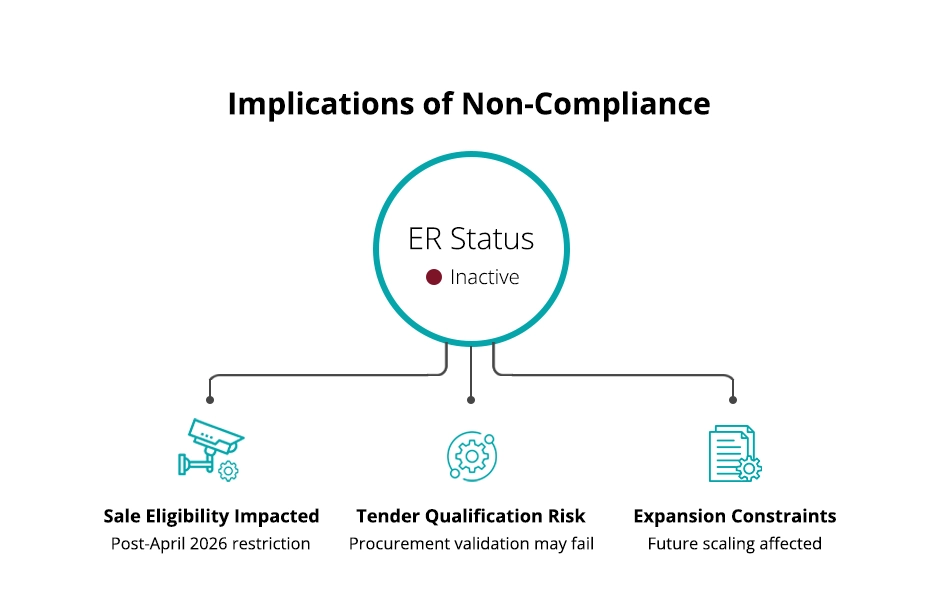
This relaxation has now been withdrawn. STQC certification and BIS certification have become mandatory.
From 01 April 2026, CCTV cameras not having STQC certification, BIS certification, or not pertaining to the ER norms, cannot be sold — even if they were previously permitted under transition provisions.
2) What Is ER Compliance for CCTV Cameras — In Practical Terms?
 ER is not a “product feature certification.”
It is a mandatory compliance requirement.
STQC certification plays a role in validating conformity to the notified Essential Requirements. But what matters for buyers is this:
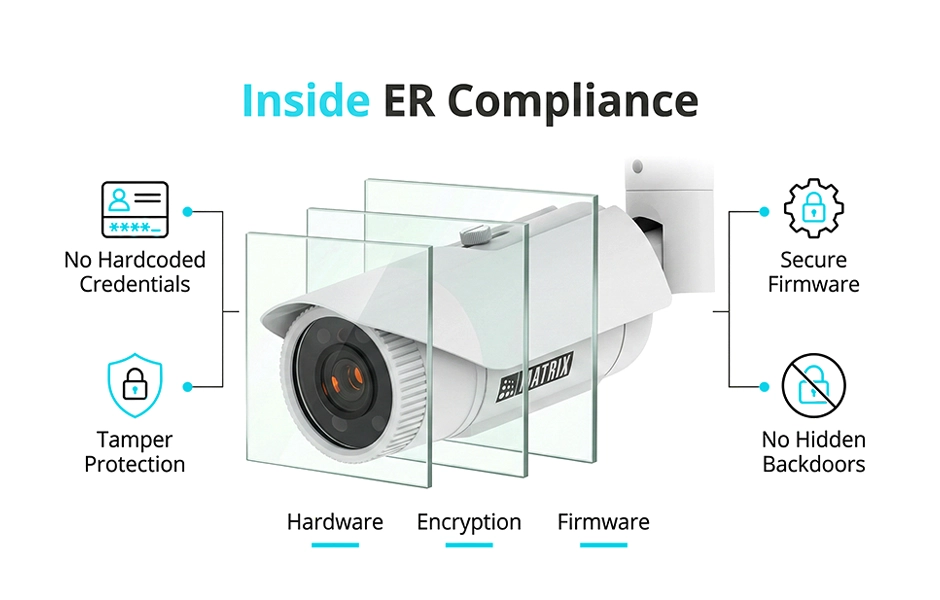
ER compliance ensures that CCTV cameras:
- Do not expose your network to cyber threats
- Do not contain hardcoded credentials or hidden backdoors
- Use secure firmware and update mechanisms
- Protect communication through strong encryption
- Prevent tampering at the hardware and software levels
In simple terms:
ER compliance exists to ensure your surveillance system does not become your weakest cybersecurity link, and cameras with the STQC certification confirm this.
For a deeper technical breakdown of ER validation layers, read our guide on Essential Requirements for CCTV Cameras explained.
3) Why You’re Suddenly Hearing About CRO and PPO
If you’re hearing new acronyms everywhere — you’re not alone.
When CCTV cameras were brought under CRO, it meant something simple for buyers:
- CCTV cameras are now regulated products.
- Compliance is no longer vendor-declared — it must align with government-notified requirements.
Now consider PPO (Public Procurement Order).
If you participate in government or PSU projects, PPO adds procurement filters such as supplier classification and local value norms.
What does this mean for you?
Before selecting a CCTV product:
- It must meet ER compliance requirements.
- It must qualify under applicable procurement rules (where relevant).
If either fails, your project may face rejection — regardless of camera specifications.
You don’t need to master regulatory language. You need to ensure the product you choose is eligible.
The simplest way to check whether the product is eligible or not is to ensure that the product has STQC certification and/or BIS Certification.
4) What Changes for Buyers and System Integrators?
This mandate changes how CCTV buying decisions should be approached. CCTV systems are rarely one-time purchases. They expand, upgrade, and evolve over time.
If you install non-compliant products today, you may face:
- Difficulty expanding the same system after 2026
- Tender rejection in future projects
- Questions during audits
- The need to replace equipment earlier than planned
The issue is not an immediate malfunction. The issue is future risk.
Increasingly, organizations are also evaluating the origin and security of surveillance equipment as part of procurement decisions. This trend is strongly influenced by national initiatives such as Make in India in the CCTV and surveillance industry.
Making the right compliance decision, choosing cameras with STQC certification now protects your long-term investment.
5) The Biggest Myths Around April 2026
Let’s simplify the confusion.
Myth 1: “This only affects manufacturing or imports.”
Reality: The rule applies to sale. After 01 April 2026, non-ER compliant CCTV cameras cannot be sold.
Myth 2: “Another extension will come.”
Reality: A transition period was already provided. It has now been withdrawn. Planning around another extension is risky.
Myth 3: “This only impacts government projects.”
Reality: While government projects are directly regulated, many private enterprises are also choosing compliant products to avoid future complications and risk.
Myth 4: “If the vendor says it’s compliant, that’s enough.”
Reality: Compliance must be formally validated. Verbal assurance or brochure claims are not sufficient. STQC certification and BIS certification on the product documentation or technical specifications confirm ER compliance
Myth 5: “ER is just paperwork.”
Reality: ER requires real engineering controls across firmware security, encryption, and hardware protection. Documentation comes after implementation.
How Do You Know If a Camera Is Compliant?
 This is the most practical question buyers ask.
Since CCTV cameras now fall under compulsory regulation, compliance involves:
- BIS registration under the Compulsory Registration Order (CRO)
- Conformity to the notified Essential Requirements (validated through STQC process)
In practical terms, you should look for:
- Valid BIS registration details
- Confirmation of ER compliance under MeitY notification
- STQC certification where applicable
Do not rely only on marketing claims.
Ask for official registration references and compliance documentation.
The Simple Takeaway
CCTV cameras are no longer just feature-driven products.
They are regulated network devices operating inside critical infrastructure.
After 1 April 2026, compliance determines sale eligibility.
Choosing ER-compliant and STQC-certified products protects your project from future disruption.
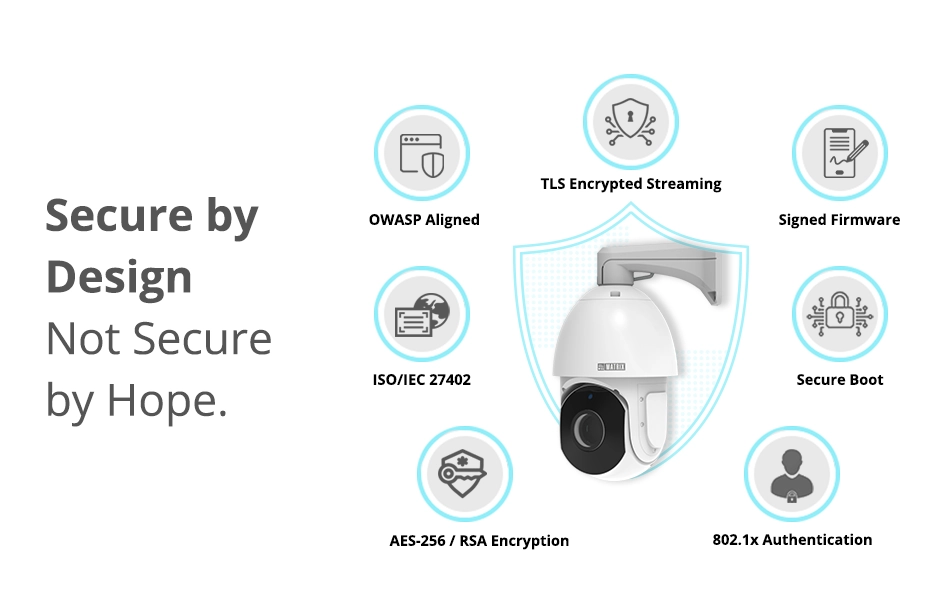
Matrix Network Cameras are designed to align with ER requirements, comply with CRO, meet PPO considerations where applicable, and are backed by STQC certification and BIS certification — ensuring regulatory readiness alongside cybersecurity assurance.
Understanding this today helps you avoid buying a system that becomes a liability tomorrow.
Frequently Asked Questions
Is STQC certification mandatory for CCTV cameras in India?
Yes. Under the Essential Requirements (ER) notified by the Ministry of Electronics and Information Technology (MeitY), CCTV cameras must comply with cybersecurity and technical requirements validated through the STQC process and BIS registration under the Compulsory Registration Order (CRO).
Can non-STQC certified CCTV cameras be sold after April 2026?
No. From 01 April 2026 onwards, CCTV cameras that do not conform to the Essential Requirements and applicable certification frameworks cannot be legally sold in India.
Why were Essential Requirements introduced for CCTV cameras?
Essential Requirements were introduced to ensure surveillance devices follow cybersecurity best practices such as secure firmware, encrypted communication, authentication controls, and protection against tampering.