
For years, organizations evaluated CCTV cameras primarily based on specifications such as resolution, storage capacity, and analytics features. Today, another factor has become equally important: regulatory compliance and STQC certification for CCTV cameras.
With the introduction of Essential Requirements (ER) by MeitY, GoI, connected surveillance devices must meet defined technical and cybersecurity standards.
This means buyers can no longer focus only on performance — they must also ensure that the cameras they deploy are legally compliant and STQC certified.
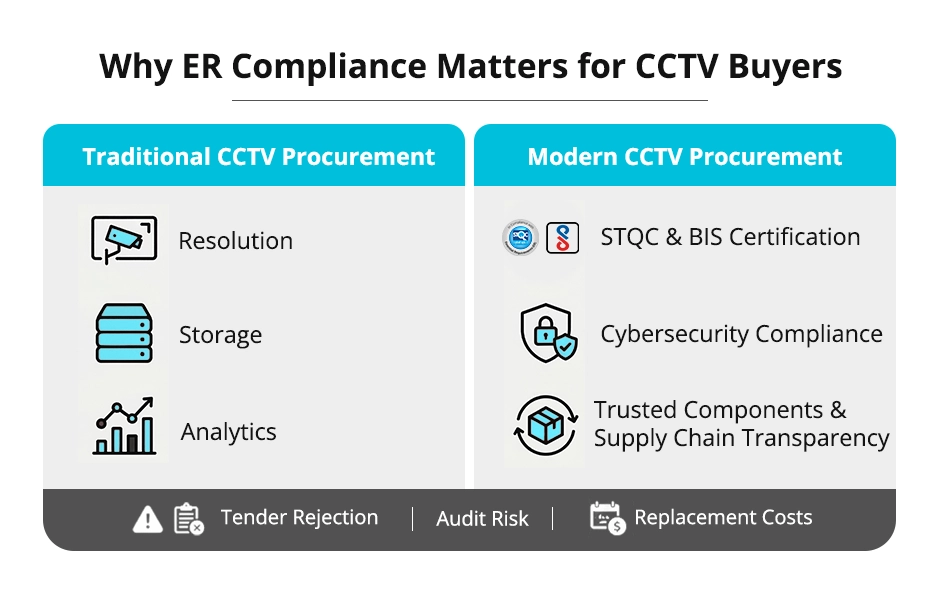 Many organizations assume compliance is entirely the manufacturer’s responsibility. In reality, buyers, consultants, and system integrators also share accountability during procurement.
Deploying non-compliant cameras may lead to tender rejection, audit complications, or costly replacements later.
If you are unfamiliar with the regulation itself, it helps to first understand the fundamentals in our STQC ER Certification 101 Guide. The next step is knowing how buyers can verify compliance and make informed purchasing decisions.
How to Replace Non-Compliant Cameras Without Rebuilding Your Entire System
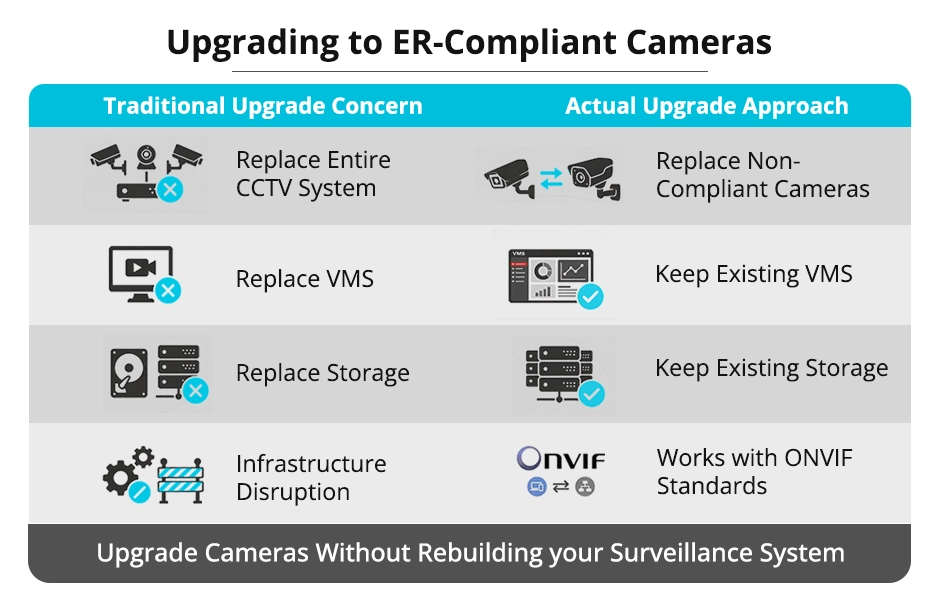
Upgrading to STQC certified CCTV cameras doesn’t require a complete system overhaul. With the right approach, organizations can transition gradually without disrupting existing infrastructure.
A common concern for organizations planning upgrades is whether ER compliance requires replacing their entire surveillance infrastructure.
In most situations, it does not.
Modern ER-compliant cameras typically support standard protocols such as ONVIF, allowing them to integrate with existing video management systems, storage servers, and network infrastructure.
This makes it possible to upgrade to STQC certified cameras gradually.
Organizations can identify cameras that will soon become non-compliant and replace them during maintenance cycles or phased upgrades, rather than rebuilding the entire system.
However, buyers should still evaluate compatibility with:
- Existing VMS platforms
- Storage architecture
- Network security policies
- Video analytics integrations
- System maintenance
- Technical support from the existing vendor
This ensures that compliance upgrades do not disrupt existing security operations.
A 5-Step Procurement Process for ER-Compliant CCTV Systems
A structured procurement approach helps ensure that CCTV cameras meet ER compliance requirements while minimizing risks during deployment and audits.
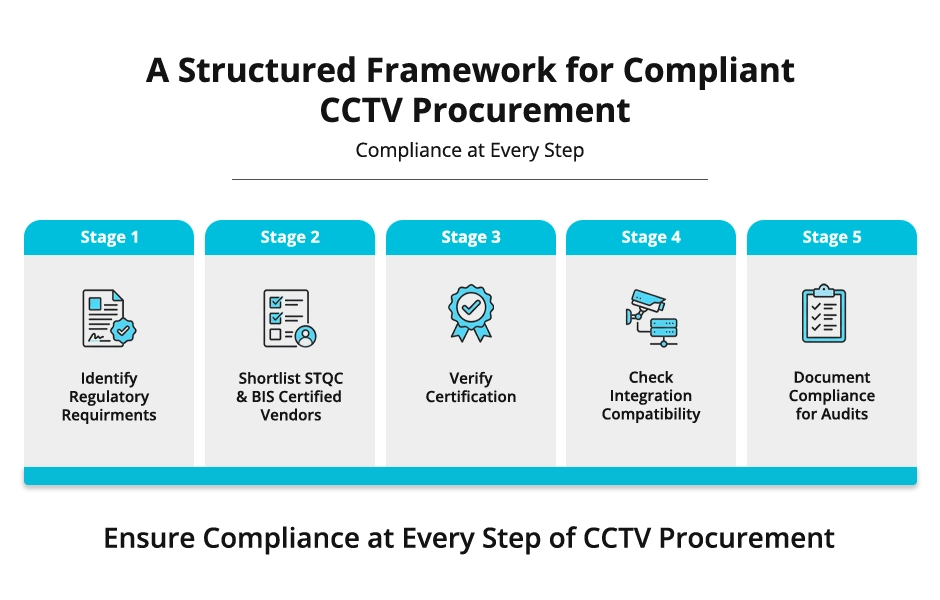 Buyers can simplify compliance by following a structured procurement approach.
Step 1 — Identify Regulatory Requirements
Confirm whether your project requires ER-compliant devices based on industry regulations, project scope, or government procurement rules.
Step 2 — Shortlist Certified Vendors
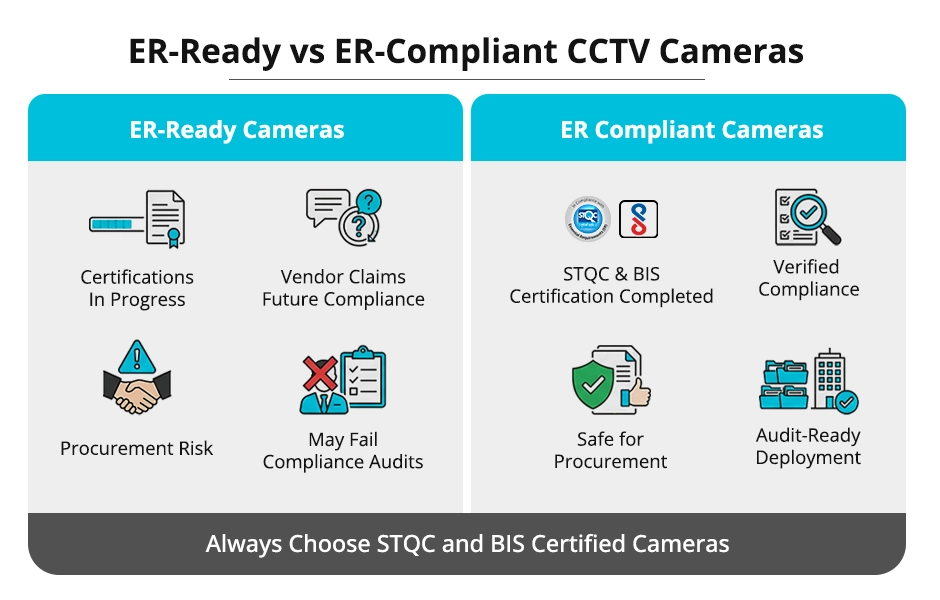
Evaluate vendors that already offer STQC certified CCTV cameras, reducing uncertainty during procurement.
Step 3 — Verify Certification Details
Request BIS registration numbers and STQC certification documentation for the exact models being proposed.
Step 4 — Evaluate Integration Compatibility
Ensure the CCTV cameras integrate smoothly with your existing Video Management System, network architecture, and security policies.
Step 5 — Document Compliance During Procurement
Maintain certification references and documentation within procurement records to simplify future audits or regulatory reviews.
Following a structured process ensures compliance becomes part of standard procurement practice rather than an afterthought.
What Can Go Wrong If ER Compliance Is Ignored
Ignoring ER compliance can lead to project delays, audit failures, and security vulnerabilities that are difficult and expensive to fix later.
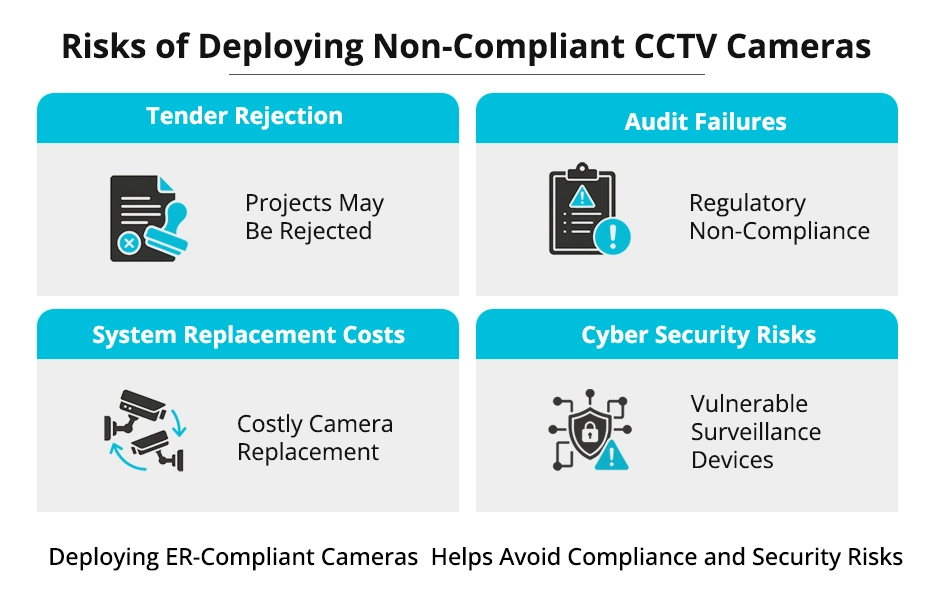 Organizations may discover during project audits that installed cameras do not meet regulatory standards, forcing costly replacements.
In government or public-sector deployments, non-compliant equipment may lead to tender rejection or project delays.
More importantly, the ER framework exists to ensure connected surveillance devices do not introduce cybersecurity vulnerabilities into enterprise networks.
For buyers, verifying compliance during procurement is far easier than correcting mistakes after installation.
Buyers who want a deeper understanding of how STQC ER compliance works for network cameras can explore the technical requirements and certification framework in detail.
Questions Buyers Often Have During CCTV Procurement
Buyers often face practical concerns around certification, compatibility, and vendor reliability during CCTV procurement. Addressing these questions early helps avoid costly mistakes.
What if my vendor claims compliance, but the cameras are not actually certified?
Do not rely on brochures. Ask for the STQC certificate and BIS registration for the exact camera model and verify them independently on the official STQC database.
What if my system becomes non-compliant later?
Check whether the vendor provides secure firmware updates and long-term compliance support. Regulations evolve, and compliant vendors should have a clear roadmap to maintain certification.
How do I protect myself during procurement?
Include compliance clauses in the purchase documentation, clearly stating that supplied cameras must be STQC certified CCTV camera models.
How do I make sure the vendor doesn’t supply old or non-compliant stock?
During delivery, verify that the product model number and packaging match the certified model listed in the STQC documentation.
What documentation should buyers keep for audits?
Maintain records of STQC certification references, BIS registration numbers, purchase orders, and product model details used in the deployment.
Choosing the Right Vendor
Choosing the right vendor ensures your surveillance system stays compliant, secure, and reliable over time.
As surveillance regulations evolve, buyers must evaluate vendors not only on product features but also on their ability to meet India’s cybersecurity and regulatory standards.
Manufacturers such as Matrix Comsec already offer ER-compliant, STQC certified network cameras, helping organizations deploy surveillance systems that are secure, compliant, and ready for long-term operation.
Take the Next Step Toward STQC-Compliant CCTV Deployment
Before finalizing your CCTV procurement, it is essential to verify compliance, documentation, and vendor readiness to avoid future risks.
Organizations planning fresh deployments can also connect with Matrix experts to discuss ER-compliant, STQC certified CCTV cameras. Before you proceed, take a moment to ensure every compliance requirement is covered.
Use this checklist to validate your CCTV procurement with confidence.
Download STQC ER Compliance Checklist
FAQs: ER Compliance and STQC Certification for CCTV Cameras
These frequently asked questions address key concerns around STQC certification, BIS registration, compliance requirements, and integration with existing CCTV systems.
What is STQC certification for CCTV cameras?
STQC certified CCTV cameras meet government-defined cybersecurity and technical standards under MeitY’s Essential Requirements (ER).
Is compliance to Essential Requirements (ER) mandatory for CCTV procurement?
For government and regulated projects, ER compliance, STQC certification, and BIS registration is mandatory. It is also becoming a standard requirement in enterprise procurement.
Can existing CCTV systems work with STQC certified cameras?
Yes, most STQC certified CCTV cameras support standard protocols like ONVIF, enabling integration with existing systems.
How can buyers verify STQC certification for CCTV cameras?
Buyers should check the STQC certificate and BIS registration for each camera model and verify them on official government databases.
Why is ER compliance important for cybersecurity?
It ensures that surveillance devices do not introduce vulnerabilities into enterprise networks and meet secure design standards.