
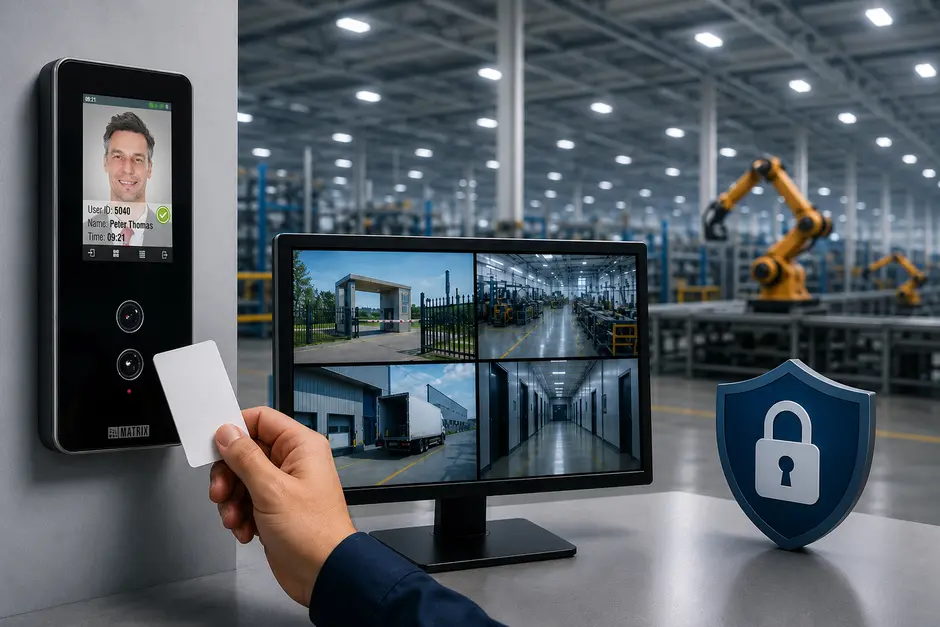
Manufacturing plant security is now a board-level priority. Connected lines, remote tools, and shared data blur cyber and physical risk. One breach can stop machines, expose designs, and put workers in danger.
Smart factories need protection that covers both worlds. Leaders must think beyond locks, guards, or basic firewalls. They need layered controls that protect people, equipment, and intellectual property. These controls must also keep uptime high. Strong security supports quality, safety, and compliance.
IP video surveillance is now the backbone of industrial security. When it links tightly with access control, it prevents intrusions and unsafe behavior. It also speeds up incident response. As a nationwide provider, Matrix delivers such integrated solutions.
Restrict Unauthorized Access With Integrated Access Control and Video Surveillance
Access control is the first layer of manufacturing plant security. It decides who can enter which gate, room, or system, and when. If this layer is weak, every other control is easier to bypass.
Common entry points for theft and breaches include perimeter gates and receptions. Loading bays, warehouses, and control rooms are also frequent targets. Tailgating, shared badges, and unsecured side doors are common issues. So are unmonitored contractor entries and unmanaged visitor access.
Threats come from both outside and inside. Outsiders may force doors, clone cards, or follow staff into restricted zones. Insiders may misuse valid credentials or enter during off hours. Some may even try to tamper with video footage.
Integrated access control and IP video surveillance close these gaps in real time in manufacturing plant security. When a card, PIN, biometric, or mobile credential is used, the system logs it. It also links the event with live video. Security teams can see who actually entered, not just which badge was used.
Role-based access is key to strong protection. Different rules should apply to:
- Permanent staff, by role, line, and shift
- Contractors, by project, time window, and zone
- Visitors, by escort, purpose, and duration
Audit trails, access logs, and video clips support investigations and checks. They help prove that only approved staff reached critical areas. These include control rooms, server rooms, or R&D labs. When linked with time-attendance, you can see who was on-site during an incident.
Central management is vital for multi-site operations. A unified platform reduces policy gaps between plants. It standardizes how alerts, reports, and investigations are handled. Matrix solutions allow central teams to manage access rules and video across sites.
Security Systems for Manufacturing: Complete Implementation Guide (Access Control Layer)
Start with a staged rollout. First, protect high-risk zones like main gates and control rooms. Then extend to warehouses, loading bays, and production lines.
Use a mix of card, PIN, biometric, and mobile credentials. Multi-factor checks at critical doors make stolen cards less useful. Design clear access policies before onboarding users. Map them to roles and shifts.
During onboarding, assign rights by job function, not by person. Review and update rights whenever roles change. Run regular audits to remove unused or risky permissions in manufacturing plant security.
Test integration with video surveillance often. Confirm that every access event has a matching video clip. This keeps your first layer reliable and complete.
Use IP Security Cameras as Your Central Security Sensor Network
IP security cameras are more than digital recorders. In modern manufacturing plant security, they act as a live sensor network.
Connected cameras watch for intrusions, unsafe behavior, smoke, or sudden motion. Smart analytics and motion detection turn video into live alarms. Tamper alerts warn you if someone blocks or moves a camera.
Operators see incidents as they unfold, not hours later. With instant alerts, they can guide guards or shut down lines. They can also lock doors to cut damage and downtime. It plays a vital role in manufacturing plant security.
Recorded footage still matters. It supports post-incident analysis and root-cause checks. You can spot patterns and fix weak points in layout or process.
Cameras also help enforce safety rules. They support checks on PPE use and restricted walkways. They also help monitor lockout-tagout zones in hazardous areas.
On a single platform, you can monitor:
- Production lines and assembly cells
- Warehouses and loading bays
- Perimeters, gates, and parking areas
This visibility improves more than crime control. It supports quality checks and standard work. It also reduces investigation time after defects or stoppages.
Centralized IP video surveillance lets one control room watch many plants. The same policies, alerts, and reports apply everywhere. This makes manufacturing plant security simpler at scale.
How to Secure High-Risk Areas in Manufacturing Plants With Cameras
Start by mapping high-risk zones. These often include warehouses, production lines, and R&D labs. Server rooms and control rooms also need close watch.
Place cameras to cover entries, exits, and key assets. Avoid blind spots by overlapping views. Check real footage, not only floor plans.
Respect privacy in sensitive areas. Use clear signage and strict access to recordings. Apply strong data protection controls.
Run regular health checks for cameras, storage, and network links. Reliable video is essential for strong protection.
Enforce Clear, Written Security Policies Across People, Processes, and Technology
Many manufacturing plant security operations still run without clear, written security policies. This creates gaps, even with advanced IP video surveillance and access control.
Policies turn technology into a consistent way of working. They define how to secure a facility day after day.
Start with simple, practical rules that cover:
- Who can access which zones, machines, and data
- When access is allowed, such as shifts and visitor hours
- How access is granted, reviewed, and removed
Include acceptable use rules for all systems and networks. Cover workstations, Wi-Fi, control systems, and recorded video.
Specify who can view, export, or share recordings. Define how long you keep video. Explain how you protect it from misuse.
Policies also need a clear incident response plan. Set steps for detection, escalation, and recovery including both cyber and physical events.
- Align this plan with IT, OT, and physical security teams to strengthen manufacturing plant security. This is key for joined protection.
- Training is essential. Brief employees, contractors, and security staff on rules. Use real scenarios and simple examples.
- Use short refreshers during toolbox talks or shift meetings. Make it easy for people to ask questions or report issues.
Strong policies also support compliance and customer audits. Many supply chains now review manufacturing plant security before contracts. Written rules show you control risk in a structured way.
Commit to periodic policy reviews. Update them when you add new lines or sites. Review them when you add new technology.
As threats evolve, your rules must evolve too. Clear policies keep every site aligned and ready.
Cost of Security Breaches in Manufacturing
Manufacturing plant security incidents lead to fast rising costs. Production can stop and raw material is scrapped. Delivery deadlines are missed and overtime costs grow. Customers may lose trust after visible incidents.
This can damage your brand and future orders. You also face investigation costs and legal exposure. There may be regulatory penalties and higher insurance costs. Time on reports and claims is time lost from improvement work.
Clear policies and regular training lower the chance of incidents. They also reduce impact, because people know what to do.
Follow a Holistic, Layered Security Strategy Across Your Entire Facility
Modern plants are highly connected. Every new device and line adds another entry point.
No single product can handle manufacturing plant security alone. Effective protection needs several layers that work together.
A strong model links:
- Video surveillance across key zones and perimeters
- Access control on gates, doors, and critical rooms
- Intrusion and safety alarms across the shop floor
- Cyber security for IT and OT networks and remote access
This layered approach lets each control back up the others. It also closes gaps between teams.
Connect physical security with core cyber hygiene. This includes network segmentation and regular backups. It also needs a clear patch schedule for cameras and servers.
Central monitoring is vital in a manufacturing plant security. A single command view should show video and alarms. It must also show access events and key network alerts.
Analytics add more value. Examples include:
- ANPR at gates linked to boom barriers and visitor systems
- Weighbridge data tied to logistics records and video
- Smart alerts on unusual movement or access outside shifts
These links help reduce both cyber and physical risk. They also improve loading accuracy and truck turnaround. Stock visibility and process control also improve.
Holistic design supports both security and efficiency. Fewer blind spots and fewer manual checks help output. Faster decisions support uptime and safety.
Expert partners like Matrix can guide end to end design. This covers architecture, product choice, and integration. It also includes long term support.
Treat security as a living system. Plan regular risk reviews and site walkdowns. Add technology upgrades as plants expand or threats change.
Continuous improvement keeps each facility aligned with best practice. It also keeps your network of plants resilient and ready.
Security Systems for Manufacturing: Complete Implementation Guide (Holistic View)
Manufacturing plant security starts with a structured risk assessment across all plants. Involve production, IT, OT, safety, and security leaders.
Next, design a layered architecture that fits your processes. Define standards for cameras, access control, networks, and storage.
- Pilot the design in one unit first. Use lessons from that site before you roll out.
- Deployment should follow clear stages. For example, perimeter first, then critical areas, then support zones.
- Document every step. Create standard operating procedures and escalation paths. Add maintenance plans for each layer.
Assign clear ownership. Name who is responsible for cameras and access control. Do the same for networks and incident response. Review performance regularly. Tune rules, reports, and integrations. Match them to real plant conditions and new risks.
Conclusion
Strong manufacturing plant security starts with four basics. Control access, use IP video surveillance, enforce clear policies, and follow a layered model. Together, these steps improve safety, uptime, and product quality. They also build a lasting edge over competitors.
Security is not a one-time project. Treat it as an ongoing program for joined protection. Speak with Matrix experts to plan or upgrade your integrated security.
Frequently Asked Questions
Why is manufacturing plant security more critical now than a few years ago?
Modern plants use more connectivity, cloud tools, and automation. This creates more entry points for cyber and physical attacks. Threat actors target production data, recipes, and control systems. Theft and sabotage risks are also rising. A joined security strategy is now essential.
How do IP security cameras help secure a manufacturing facility beyond simple recording?
IP cameras support real-time monitoring and alerts. They detect intrusions and unsafe behavior. They help spot tailgating, blocked exits, and PPE violations. Recorded video speeds up incident investigations and root-cause analysis. Analytics can support quality checks and line balancing. This improves both security and daily operations.
What are the first steps to protect high-risk areas like warehouses and R&D labs?
Start with a clear risk assessment of assets and threats. Then design access control for sensitive zones. Use badges, biometrics, or PINs at key doors. Place IP cameras at entries, exits, and process points. Add visitor rules and escort policies. Mark restricted areas clearly. Train staff so everyone understands why controls matter in manufacturing plant security.
How can I justify the cost of integrated security systems to management?
Link the investment to avoid costs from theft and downtime. Include safety incidents and quality escapes. Show how better access control and video reduce disruption. Explain how strong security supports compliance and audit readiness. Stress the impact on customer trust and brand reputation. One planned system often costs less than one serious breach.
Can one solution or product fully secure our manufacturing units?
No single product can cover all security needs. Effective protection uses a layered approach. Combine access control, IP surveillance, and network security. Add visitor management, policies, and staff training. Integrate systems so alarms, video, and logs work together. This model reduces blind spots and improves response in manufacturing plant security.