
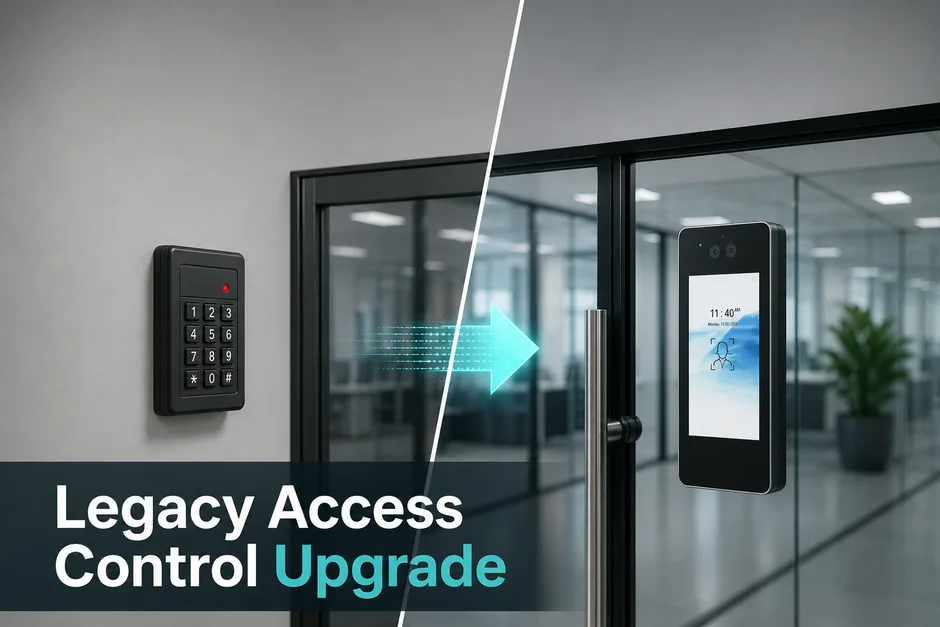
Old safety tools create major risks. Your legacy access control system likely lacks modern encryption. Disjointed safety setups can raise daily admin work by up to 40%. Old hardware also fails to work with mobile credentials or HR software. This creates silos that waste time and money.
A legacy access control upgrade fixes these gaps. Modern systems help you manage safety from one place. They also make your daily work smoother.
Moving your setup brings key benefits:
- Use IP based access control to link doors to your network.
- A modern access control system offers better encryption and remote control.
- Integrated access control and time attendance helps you track hours and safety at once.
A biometric door controller migration can happen in stages to save costs.
Follow a clear access control upgrade checklist to avoid downtime. This ensures your move is safe and fast.
Why Is Your Legacy System Holding You Back?
Legacy hardware often uses weak signals. Safety studies show that legacy cards can be cloned in under 5 seconds using cheap online tools. This makes your building open to card cloning and unauthorized entry. Finding spare parts for these systems is hard and costly.
Old systems act like isolated islands. You pay more for less safety and no room to grow. They cannot easily link to your network or other apps.
Consider these risks of staying with old tech:
- High Maintenance Costs: Old panels break often and cost more to fix.
- Safety Gaps: Weak encryption makes it easy to copy access cards.
- Limited Growth: Adding new doors requires costly, proprietary wiring.
- Modern systems help you stay safe and save cash over time.
Traditional legacy vs modern access control contrasts are clear. Old systems rely on basic signals and fixed wiring limits. In contrast, modern systems use strong encryption and easy IP growth. They also support integrated access control and time attendance instead of standalone islands.
You likely pay more each year for shrinking support. A legacy access control upgrade lets you reuse existing wiring. This helps you phase in new readers slowly.
- Check your current panels and wiring.
- Find all high-risk doors first.
- Choose open standards to avoid brand lock-in.
The Core Components of a Modern Migration
Does your team struggle with split data? A modern access control system unifies your hardware and software. This solves slow response times. Old panels create safety gaps and high repair costs. This year is the best time for a legacy access control upgrade. Moving to a biometric door controller migration adds even more protection. It secures your assets and eases daily tasks.
Switching to IP based access control lets you manage each site from one place. This solves the problem of scattered data across different offices. Matrix Comsec designs and makes its own hardware and software. This ensures your system works together without glitches. We own the full tech stack for better uptime.
One system replaces local silos with centralized IP control. It swaps frequent downtime for high-uptime panels and builds on secure-by-design setups.
A biometric door controller migration removes the risk of lost cards. It also stops employees from sharing badges. Modern units handle busy crowds without slowing down. We offer integrated access control and time attendance in one platform. This helps your HR team by automating payroll logs. You save time and cut manual errors. It is a simple way to boost site safety.
Choosing the Right Migration Strategy
Old safety systems create risks and slow down your staff. A modern access control system fixes this with networked panels and central monitoring. Without a legacy access control upgrade, you face high costs and blind spots.
Upgrade Strategies
Big Bang Shift: Replace all gear at once during a weekend. This works best for small offices.
Phased Shift: Upgrade one floor or building at a time. This keeps your site running as you switch to IP based access control.
Hardware Bridges: Use modules that work with your old wiring. This saves cash while you replace the system’s “brains.”
Most teams want an integrated access control and time attendance platform. You might also want a biometric door controller migration to stop badge sharing. To start, clean your data. Remove old users and update access groups before moving them to the new software.
A clean database and a phased plan reduce your risk. Matrix designs hardware for 24/7 use to ensure your move is smooth and reliable. This step saves time and eases your daily safety audits.
How Matrix Compares to Industry Alternatives
Upgrading safety should not feel like a puzzle. Many firms struggle with mismatched parts during a modern access control system shift. This mess leads to high costs and downtime. Matrix eases your legacy access control upgrade with one unified platform.
Open hardware: We support IP based access control and biometric door controller migration using standard, open interfaces. This prevents vendor lock-in.
Unified software: Our native platform integrates access control and time attendance. This cuts third-party software setup bugs.
Native safety features: We design secure links and communication as core features, rather than an afterthought.
In-house design: We design every circuit and line of code in-house, ensuring 24/7 uptime.
With a single brand, you get a single point of contact. This resolves issues faster. You can plan your access control upgrade checklist with confidence. Our systems are built to last and easy to grow. This approach saves you time and lowers your total cost of ownership.
Your Path to a Future-Proof Facility
Upgrading to a modern access control system is a strategic move for operational confidence. Matrix Comsec eases your legacy access control upgrade with integrated hardware. Consult a specialist to review your upgrade checklist. Plan a phased rollout to ensure continuous work. Moving to IP based solutions reduces risk. You gain efficiency and a simplified daily safety workflow.
Conclusion
Moving to a modern access control system is vital for your site safety. Legacy hardware creates risks that only a legacy access control upgrade can fix. By choosing IP based access control, you link safety and HR workflows.
Matrix Comsec eases this journey with integrated access control and time attendance. Whether you choose a phased rollout or biometric door controller migration, the goal is uptime. Start by reviewing your access control upgrade checklist today. Consult with a specialist to check your current wiring.
Frequently Asked Questions
Can I reuse existing wiring during a legacy-to-modern access control upgrade?
Yes, you can often reuse current field wiring. Many modern IP based access control panels support Wiegand or OSDP links. Matrix Comsec provides flexible hardware that bridges legacy systems with new biometric door controller technology. This helps you reuse existing assets.
How do I handle regional building codes during a nationwide rollout?
You must map each site to local safety rules. Matrix Comsec prioritizes integrated life safety and compliance rules. This ensures your access control and time attendance setup meets all regional rules.
What is the benefit of an IP based access control system?
These systems offer remote control and real-time alerts. They use open APIs for easy integration with your network. Matrix Comsec delivers a unified hardware and software stack. This simplifies your migration while providing better analytics and lower cost of ownership.
How long does a typical access controller migration take?
A phased shift often takes several weeks for large portfolios. However, individual door downtime usually lasts only a few hours. Using an access control upgrade checklist helps manage this timeline. This strategy ensures continuous operations. It allows your team to validate the cardholder database migration before the final system cutover.