
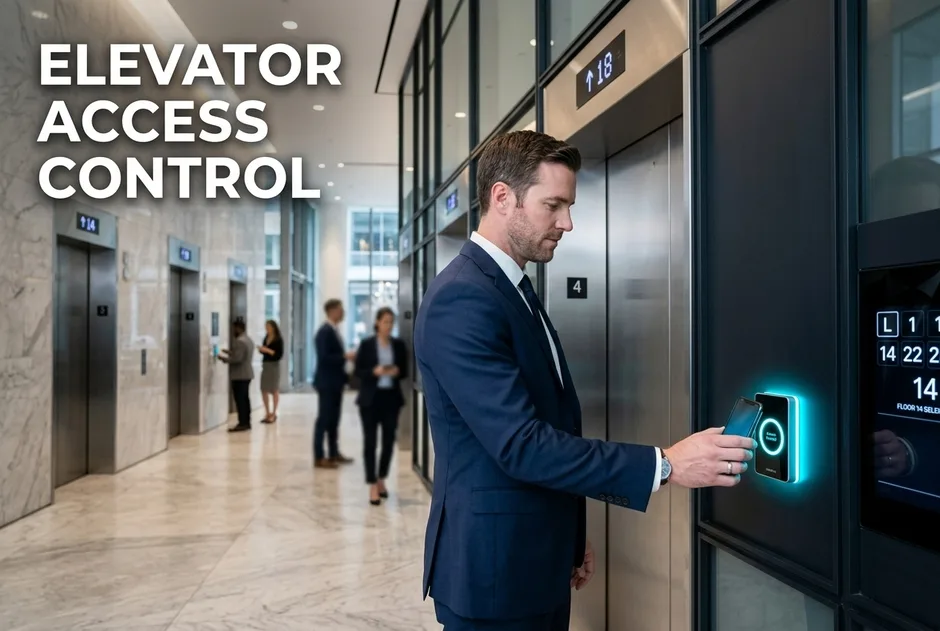
Traditional lifts often allow completely free transit through a building. This open access creates major risks for multi-tenant sites. Rogue guests can easily slip onto private floors, raising the risk of theft and data loss.
Modern elevator access control systems protect multi-floor buildings from rogue guests. By requiring key cards or smart badges, you can block floor access to unauthorized staff. This setup improves site views, stops crime, and gives clear logs.
What this means for you is peace of mind, better compliance, and simple daily work. Ready to upgrade your site? Explore Matrix smart access control solutions to protect your site today.
Why does vertical access control matter?
Free lifts allow anyone to wander anywhere in your building. This open vertical transit leaves offices, flats, and assets open to theft. It is a major gap that lobby guards often miss.
We deploy smart elevator access control to manage doors from the cloud. Instead of offering a passive ride, the setup checks users before they reach secure floors.
Old System vs. Modern System
| Traditional Lifts | Modern Access Control |
| Anyone can select any floor. | Users must scan keys first. |
| No record of who went where. | Detailed audit logs track every user. |
| High risk of tailgating and theft. | Restricted access stops intruders. |
Implementing this technology delivers key results:
- Enhanced On-Site Defense: Keep rogue guests away from sensitive floors holding private data or assets.
- Crime Prevention through Audit Logs: Access logs stop theft by tracking all vertical transit.
- Premium Tenant Attraction: Improved protection makes your site attractive to high-paying clients.
What This Means for You
You turn passive vertical transit into an active, audited checkpoint. This simple upgrade protects your people, secures your assets, and raises your site value.
Which keys work best for lift access?
Managing vertical transit in busy buildings is a constant challenge. If you rely on weak access ways, rogue guests can easily slip through. This compromises your site defense.
How do you find the right balance between tight defense and smooth traffic flow? Choosing the correct key type is the critical first step. It determines how safely and quickly people move.
Why Do You Need Face Recognition?
High-defense zones need absolute proof. Biometric options like face recognition and finger scans prevent key sharing. They offer maximum protection for labs and server rooms.
How do QR Codes Simplify Guest Access?
Managing guests can overwhelm your work. QR codes provide a cheap way for guest access. You can email a time-restricted code that expires on its own.
| Key Type | Defense Level | User Convenience | Work Load | Best Use Case |
| Mobile Keys | High | High | Low | Modern corporate offices |
| Card / Fob | Medium | Medium | High | Old corporate buildings |
| Keypads & PINs | Low | Low | Low | Restricted utility floors |
| Biometrics | High | High | Medium | High-security private areas |
| QR Codes | Medium | High | Low | Temporary guest access |
How to Deploy Your New System
- Assess your daily traffic patterns and map high-security zones.
- Select a reader that supports mobile, RFID, and QR codes.
- Link the readers with cloud software for remote control.
Old fobs work, but they do not think. Upgrading to mobile keys future-proofs your building and cuts card management. Meanwhile, keypads and PIN codes remain a cheap choice, though shared codes present risks.
What This Means for You
You can secure your building without slowing down your team. Contact Matrix experts today to design scalable systems.
How Do Different Lift Types Impact Site Defense?
Standard measures fail when building layouts change. A single-car lift has different risks than a large multi-car bank. Your choice of lift control must match your specific setup.
Reports show that elevator access control reduces unauthorized building floor entries by 40%.
- Single Lifts: Best for smaller sites. Readers reside inside the cab to authorize floor buttons only after a user scans. This prevents guests from reaching secure levels.
- Lift Banks: Designed for high-traffic buildings. These setups require floor-specific keys to prevent rogue floor hopping between secure levels. This is vital for multi-tenant sites.
- Smart Lifts: These systems use destination dispatch. They assign riders to specific cabs based on their keys.
Integrating smart control improves passenger flow by grouping people by destination. It also prevents tailgating because rogue users cannot select random floors once inside.
What This Means for You
Your physical layout dictates your risk level. Tailoring your setup to your specific building design keeps assets secure without slowing down your daily work. Contact Matrix experts to secure your building today.
How can lift access be set up?
Standard configurations leave your floors open to risks. Anyone can hop into a cab and wander around your building. This lack of control endangers your assets, private data, and tenant protection. It also makes auditing entry points nearly impossible.
Implementing tailored configurations solves this issue. You can choose from four setups to protect your property. These configurations allow you to manage guest traffic and restrict secure levels.
- Old System: Standard buttons allow anyone to reach any floor at any time.
- Modern System: Smart setups restrict access based on user keys and custom schedules.
| Configuration Mode | Lobby Calling | Cab Selection | Best Site Type |
| Private (General Access) | Requires key | Free selection of any floor | Private facilities |
| Public (Private Access) | Open calling | Requires key for select floors | Multi-tenant buildings |
| Combined Hybrid | Requires key | Requires key | High-defense sites |
| Destination-Controlled | Scan key to assign cab | Auto-selected (no buttons) | Modern smart buildings |
Configuring your system correctly ensures that only authorized users reach secure areas. You can easily adjust permissions as your business needs change.
What This Means for You
Choose the configuration that matches your daily traffic flow. Contact Matrix experts today to build a secure, seamless system for your site.
What should you consider before building lift defense?
Securing a modern building can feel overwhelming. Choosing the wrong setup frustrates tenants and leaves critical gaps. You need a system that balances robust protection with daily ease.
To protect your property, focus on these five factors:
- User ease: Keep movement frictionless so authorized tenants navigate the site without delays.
- Future-proof hardware: Select smart readers that support multiple formats including mobile and RFID keys.
- Cloud management: Insist on clean software for remote oversight, instant key revocation, and real-time alerts.
- System interoperability: Link with other site defense systems. This lets fire alarms trigger automatic lift lockdowns.
- Global compliance: Verify cybersecurity and alignment with global standards like NDAA, GDPR, and BIS/STQC.
What This Means for You
Do not settle for isolated, outdated hardware. Invest in a compliant, integrated solution that protects your assets while simplifying daily operations. Contact Matrix experts today to design a secure system for your site.
Frequently Asked Questions
Can lift access systems link with fire alarms?
Yes, modern setups must link with building fire alarms. During an emergency, the fire alarm triggers the access control system to automatically unlock all restricted floors. The cabs then recall to a designated floor so passengers can exit the building safely. This response is crucial for complying with local codes while protecting occupants.
How does destination dispatch work?
This is an intelligent transit solution that groups passengers traveling to the same floors into the same cab. Users select their desired floor on a lobby touch screen before boarding. The system then directs them to a specific elevator. This process greatly optimizes travel times, reduces lobby crowding, and prevents rogue users from accessing secure floors.
How do mobile keys improve lift defense?
Mobile keys significantly improve lift defense by replacing physical key cards with secure smartphone access. Because people rarely share their personal mobile devices, the risk of rogue key sharing is extremely low. Bosses can instantly grant, edit, or revoke access rights through a central cloud platform. This digital approach ensures rapid defense updates and cuts the risks of lost or stolen badges.
Why Upgrade Your Lift Defense?
Implementing robust elevator locks protects assets, reduces risks, and streamlines building operations. Modern elevator setups keep unauthorized visitors out while ensuring smooth transit.
- What This Means for You: You get total control over floor access and peace of mind.
To ensure 24/7 continuity, consult with our security experts today. We design strong, end-to-end systems built for your needs.
Conclusion
Traditional lifts leave your building open to risk. Modern control solves this big defense gap. Using mobile keys or fobs protects your floors and assets. These smart setups track users and improve daily operations. Choose the best setup to match your building layout and traffic flow. This simple upgrade keeps tenants safe and raises your property value. Protect your people and secure your assets with ease. You turn passive vertical transit into an active checkpoint. Do not settle for old hardware. Contact Matrix experts today to design a smart system for your property.
Firms install elevator security systems to track who goes to each floor. A user scans their card at the elevator card reader to select a floor. An elevator fob system works well for keyless office building entries. An elevator destination control system routes riders to the best cab before boarding. Studies show that smart destination dispatch systems increase passenger transit efficiency by 30%. Surveys indicate that integrated building systems lower emergency response times by 35%.