
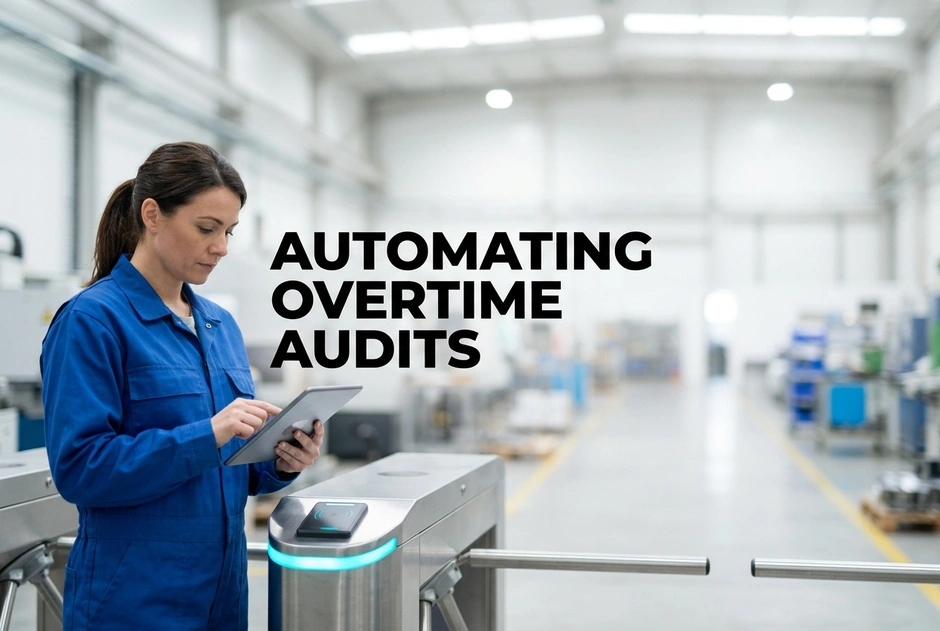
Manual overtime management creates massive labor leakage across factory floors. Unverified hours, ghost shifts, and manual log errors inflate payroll costs significantly. These administrative gaps also create severe compliance risks with local labor laws.
Old System vs. Modern System:
- Old System: Paper sign-ins, unverified supervisor approvals, and undetected time theft.
- Modern System: Biometric access logs, automated rule engines, and real-time exception alerts.
How labor leakage happens:
- Unapproved shift extensions bypass formal supervisor review.
- Manual attendance entry leads to costly human error.
- Lack of integrated access controls allows ghost punching across shifts.
What This Means for You:
Unchecked overtime drains operational budgets quietly every month. Upgrading to automated workforce controls stops financial leaks immediately, ensures audit readiness, and streamlines supervisor approvals.
Next, we explore the root causes of overtime leakage and how automated systems prevent them across plant operations.
What Is Overtime Leakage and Why Does It Go Unnoticed?
Overtime leakage is the financial gap between hours paid and productive labor performed on the shop floor. It goes unnoticed because legacy manual attendance spreadsheets fail to verify physical presence. Disconnected time card punches and siloed security gate records obscure time theft from plant supervisors. Learning how to automate overtime audits helps facility leaders eliminate payroll drains.
Old System vs Modern System:
- Old System: Isolated security gate records allow unverified time punches to bypass supervisory checks.
- Modern System: Automated tracking ecosystems match biometric access events directly with active shift rosters.
When entry logs remain disconnected from attendance software, unapproved early arrivals and late departures inflate payroll automatically. Centralized validation ensures that every paid minute reflects actual productive floor work.
What Are the Main Drivers of Labor Leakage in High Volume Operations?
High volume manufacturing plants suffer from three primary drivers of labor leakage:
- Buddy punching at unmonitored plant entry points
- Pre shift early entry without supervisory sign off
- Unapproved shift extensions following routine production line shutdowns
Detecting labor leakage in manufacturing requires real time alignment between biometric access events and shift rosters. Without instant verification, managers routinely approve invalid hours. Rule based exception alerts help reduce overtime costs in manufacturing before payroll runs.
What This Means for You:
Combining biometric access control with overtime management stops financial leaks instantly. You maintain complete audit readiness, enforce labor rules, and protect operational margins. Next, we examine how rule engines automate OT approvals across complex multi site plants.
How Can You Automate Overtime Audits in 5 Actionable Steps?
Learning how to automate overtime audits requires connecting physical turnstiles directly to enterprise payroll rules. Manufacturers reduce overtime costs by capturing exact gate entries. They apply compliance logic, enforce pre-approvals, run real-time anomaly alerts, and sync clean data directly to payroll.
Old System vs. Modern System:
- Old System: Paper sign-in sheets allow unverified hours and manual payroll entry errors.
- Modern System: Biometric event logs feed rule engines to catch unapproved shifts automatically.
This automated blueprint helps plants address complex state-level overtime rules and regional labor agreements without manual paperwork.
Step 1 & 2: How Do You Connect Biometric Access to Central Roster Rules?
- Step 1: Deploy biometric access control at plant entry points to eliminate proxy attendance completely.
- Step 2: Embed shift rosters and union CBA rules directly into the central enterprise time-attendance engine.
Integrating hardware and software ensures that physical arrivals match assigned shift windows instantly. Gate readers block unapproved early entries, keeping unauthorized minutes off the books.
Step 3, 4 & 5: How Do Automated Workflows Enforce Approval and Flag Anomalies?
- Step 3: Establish pre-approval workflows where line supervisors must authorize extra hours before shifts occur.
- Step 4: Use automated exception reporting to cross-examine physical presence against claimed overtime hours.
- Step 5: Push verified, audit-ready labor data directly into central ERP and payroll engines.
These steps halt payroll drains across multi-site operations. Line managers resolve discrepancies immediately rather than during end-of-month payroll audits.
What This Means for You:
Automating your overtime governance stops labor leakage while protecting operational margins. Unlike standalone readers, Matrix offers an integrated access, video, and workforce ecosystem that automatically flags shift anomalies before payouts. Next, we will explore key metrics for measuring overtime return on investment.
What Compliance and Regional Rules Must Your Audit System Handle?
Learning how to automate overtime audits requires flexible rule engines that adapt to labor regulations. Your audit platform must handle state mandates, daily limits, and collective bargaining agreements (CBAs) automatically without manual intervention.
Key compliance rules must include:
- Daily OT thresholds in states like California compared to weekly caps in other regions.
- Mandatory rest period rules between shifts to ensure employee safety and fair workplace conditions.
- Union CBA guidelines covering seniority rights, mandatory rest breaks, and pre-approved overtime caps.
Automating these complex workforce rules helps reduce overtime costs by flagging unapproved hours before payroll processing. It minimizes expensive compliance fines while streamlining routine labor audits across enterprise plants.
How Do Automated Audits Safeguard Multi-Site Operations?
Multi-site plant operations eliminate administrative overhead by centralizing rule engines across diverse manufacturing facilities. Centralized management ensures every location enforces local labor laws consistently without duplicating administrative work or creating compliance loopholes.
Key steps to prevent overtime leakage include:
- Centralizing shift logic to maintain uniform policy enforcement across all facilities nationwide.
- Generating proactive alerts before employees breach mandatory rest period guidelines on duty.
- Cross-examining biometric door events against assigned shift rosters to verify physical presence accurately.
What This Means for You:
Managing regional compliance requires integrated workforce controls across every single manufacturing facility. Matrix connects biometric entry, video verification, and time-attendance into a unified platform.
Next, we will explore key performance metrics for measuring overtime return on investment across operations.
How Does Unified Access and Time-Attendance Prevent Overtime Abuse?
Unified access control and time-attendance systems prevent overtime abuse by cross-referencing physical entry logs with attendance records. Standalone software relies on manual clock-ins that allow buddy punching or early log-ins. Tying turnstile entry and exit events directly to time-attendance logs verifies physical presence before approving overtime pay.
Learning how to automate overtime audits requires linking physical door access control with automated time tracking. When physical turnstile events validate shift logs, unearned overtime claims drop significantly. Enterprise architectures also deliver high hardware reliability exceeding 100,000 hours MTBF for 24/7 mission-critical operations.
System Comparison:
- Standalone Software: Tracks clock-ins without physical entry verification.
- Integrated Stack: Syncs turnstiles, video feeds, and attendance logs automatically.
What Should Enterprises Look for in an OT Audit Solution?
Enterprises should evaluate non-proprietary architectures that support software scalability across multi-site facilities. Systems must meet strict cybersecurity compliance standards, including STQC/BIS, NDAA, and GDPR. Selecting open, non-proprietary platforms ensures seamless integration with existing factory systems.
Essential capabilities include:
- Direct integration between biometrics, physical turnstiles, and video management.
- Automated rule engines that reduce overtime costs in manufacturing plants.
- Detailed audit trails that simplify labor law compliance.
What This Means for You:
Implementing this unified solution provides complete operational visibility and measurable TCO reductions. Matrix delivers an integrated ecosystem that outperforms standalone hardware. Unlike basic biometric readers, our platform links physical security directly to payroll rules. This prevents labor leakage while cutting administrative expenses.
Frequently Asked Questions
How does automated overtime tracking prevent buddy punching on the shop floor?
Automated systems link access turnstiles and time-attendance readers directly with biometric technology, such as facial recognition or fingerprint scanners. This ties site access and shifts logs uniquely to individual workers. As a result, employees cannot clock in for absent colleagues, eliminating proxy punches across manufacturing facilities.
Can automated OT systems adapt to union rules and varying overtime rules?
Modern automated systems use rule-based engines that adapt to specific shift rules. They enforce union contract requirements, seniority preferences, and mandatory rest periods. These tools also apply state-level daily or weekly overtime caps automatically. This reduces legal risk and eliminates administrative workload for HR teams.
How quickly can a manufacturing plant see ROI after automating OT audits?
Most manufacturing plants achieve return on investment within three to six months. Automated audits eliminate unearned overtime and prevent costly payroll calculation errors. Additionally, operations teams save dozens of administrative hours every week by replacing manual review procedures with automated policy enforcement.
How Can Manufacturers Take Control of Labor Costs Today?
Manual audits waste time and leak profits. Learning how to automate overtime audits turns labor tracking into a competitive edge. Modern unified access and time-attendance software enforces policies in real time.
- Old System: Paper logs, manual checks, high administrative costs.
- Modern System: Automated tracking, zero leakage, instant control.
What This Means for You:
Integrated tools reduce overtime costs in manufacturing while protecting compliance. Consult with our security and workforce management specialists today to review your plant’s overall audit readiness.
Conclusion
Manual overtime tracking drains operational budgets through unverified hours, manual errors, and labor leakage. Learning how to automate overtime audits transforms legacy timekeeping into a secure, streamlined system.
Connecting biometric access directly to central rule engines helps manufacturers reduce overtime costs in manufacturing. Integrated platforms stop buddy punching, prevent unapproved shift extensions, and enforce strict labor compliance. These automated controls eliminate payroll errors before payouts occur, saving time and operational capital.
Upgrading your workforce management protects plant profitability while ensuring complete audit readiness across all facilities. To take control of your labor costs today, consult with workforce management specialists to evaluate your plant’s audit readiness.