
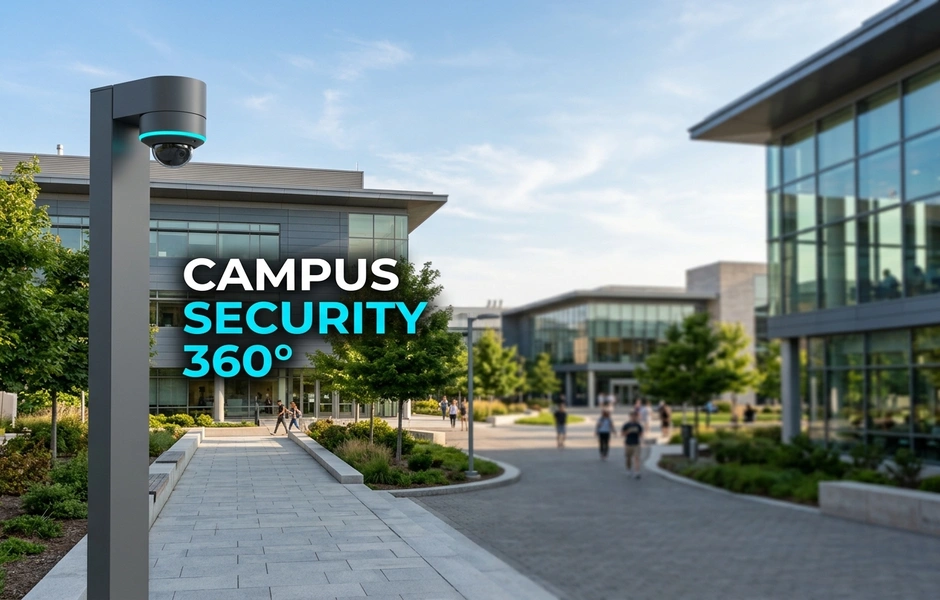
Multi-building university and corporate campuses frequently face fragmented physical safety systems. Disconnected video cameras, standalone door locks, and isolated visitor logs slow down critical emergency responses. Managing these disconnected tools increases operational costs, creates dangerous blind spots, and leaves students, staff, and assets exposed during critical incidents.
Modern campus management requires a holistic campus security system design. By unifying university access control and CCTV into a central platform, site administrators gain real-time visibility across all facilities. Integrating video surveillance with building access, fire alarms, and local first responder networks transforms reactive monitoring into a proactive defense ecosystem. Unlike hardware-centric video vendors, Matrix Comsec delivers a unified platform combining IP video, access control, time-attendance, and telecom systems on one cohesive infrastructure.
To eliminate operational silos, campus leaders must replace legacy point solutions with scalable, modern open-platform architectures. Connecting mobile credentials, digital visitor management, and automated lockdown alerts ensures swift coordination across widespread sites. Combining environmental design principles with smart technology also reduces risk while respecting user privacy across open campus borders.
A unified physical security architecture provides real-time visibility, lowers total cost of ownership, and ensures continuous operational resilience across high-density campus environments. Read on to explore practical strategies for building a fully integrated safety framework across your campus.
Why Is Traditional Siloed Campus Security Failing Modern Enterprises?
Traditional siloed campus security fails because independent systems create critical operational blind spots, slow emergency response times, and inflate long-term maintenance costs. When access control, IP cameras, and alarms operate separately, operators must manually cross-reference events across different screens. This manual effort delays emergency actions during critical situations.
Disconnects between legacy hardware prevent full visibility across large facilities, research labs, and open green spaces. Implementing a modern campus security system design bridges these gaps by unifying video and access control. Unlike single-purpose platforms like Hikvision or Axis, Matrix Comsec offers natively integrated physical security and communication on a single architecture.
Old System vs. Modern System:
- Old System: Fragmented databases, delayed incident verification, and high recurring licensing fees.
- Modern System: Real-time unified monitoring, automated response workflows, and lower total cost of ownership.
What Operational Risks Do Fragmented Surveillance and Access Control Create?
Siloed monitoring tools introduce major operational vulnerabilities across multi-building campuses:
- Delayed incident identification: Unlinked camera feeds require physical verification when doors are forced open. Unconnected university access control and CCTV setups waste vital response minutes.
- Inconsistent access policies: Managing student and staff credentials across isolated building databases leads to compliance gaps. Overlooked permissions increase unauthorized access risks across facilities.
- Data fragmentation: Storing event logs across separate NVRs complicates forensic audits. Disjointed records make tracing incidents across zones nearly impossible.
“It works, but it doesn’t think.” Isolated systems record incidents without aiding swift threat prevention.
How Does Siloed Hardware Drive Up Total Cost of Ownership (TCO)?
Separate security hardware drives up operational expenses through hidden overhead:
- Multiple software license fees: Paying annual subscriptions for distinct VMS, access control, and time-attendance platforms strains budget resources.
- Complex third-party integrations: Custom API bridges between different vendors often break during software updates, requiring costly IT intervention.
- Redundant infrastructure costs: Deploying separate cabling networks and server hardware for corporate park security solutions duplicates capital expenditures.
What This Means for You: Consolidating your security architecture into a single unified platform eliminates redundant maintenance while streamlining emergency response. Pay once, scale later. Next, let’s explore integrated design.
How Do You Design a Multi-Layered Campus Security Architecture?
Designing a multi-layered campus security architecture requires establishing concentric defense zones, applying environmental design principles, and unifying management policies. Security begins at the outer perimeter and extends inward to high-risk research facilities. Effective campus security system design combines physical barriers with university access control and CCTV monitoring to create a proactive defense.
- Graduated security zones: Divide the property into public perimeters, semi-private academic spaces, and restricted facilities.
- Crime Prevention Through Environmental Design (CPTED): Combine active surveillance with proper lighting, trimmed landscaping, and natural sightlines to deter intruders.
- Unified policy management: Centralize credential permissions based on user roles, schedules, and facility rules.
This approach creates structured protection while maintaining open access.
What Role Does Perimeter Security Play in Open-Campus Environments?
Perimeter security forms your critical first line of defense without creating an unwelcoming fortress feel. Open environments require smart monitoring that adapts to distinct regional geographies.
- Smart perimeter monitoring: Deploy high-resolution IP cameras with intelligent analytics along fencing lines for real-time intrusion alerts.
- Regional adaptability: Tailor physical barriers and CPTED lighting for open spaces across regional geographies like Texas tech hubs or Midwest university towns.
- Automated license plate recognition: Track vehicle entry at main gates to streamline parking management and instantly identify blacklisted vehicles.
Smart perimeters detect threats early, keeping open spaces welcoming yet safe.
How Should You Implement Building Access Control and Student and Staff Safety Systems?
Building access control requires flexible, intelligent controls that protect people without slowing daily campus movement. Modern student and staff safety systems balance convenience with strict identity verification.
- Role-based access permissions: Issue dynamic credentials that adjust access rights based on class schedules, work shifts, or facility bookings.
- Multi-factor authentication: Secure entryways and residence halls using smart cards, mobile credentials, and biometrics.
- Centralized credential revocation: Instantly deactivate lost cards or former employee credentials across all buildings from one central dashboard.
Unlike camera-centric brands like Hikvision, Matrix Comsec offers a unified platform that natively integrates video surveillance, access control, and telecom.
How Do You Secure High-Risk Zones Like Data Centers and Laboratories?
High-risk zones demand strict interior controls and complete audit trails. Specialized protocols eliminate single points of failure.
- Hardened interior perimeters: Require strict biometric access control and continuous video recording for sensitive data centers and research labs.
- Two-person rule verification: Enforce dual-authentication protocols for restricted chemical storage or server rooms.
- Audit-ready access logs: Automatically capture timestamped video clips alongside every entry attempt for regulatory compliance.
What This Means for You: Unified multi-layered security architectures simplify daily campus management, streamline daily operations, and lower operational risks across every building. Up next, let’s explore emergency response workflows.
How Do Integrated CCTV and Access Control Systems Improve Real-Time Response?
Integrated physical security links access control alarms directly with live video feeds. When an unauthorized door opens, the system instantly pops up live video on the monitoring screen. Security operators do not waste critical seconds searching through hundreds of cameras. Automated workflows trigger immediate door lockdowns and restrict elevator access across affected zones. Interactive digital floor plans map the incident location in real time to guide security teams.
Old System vs. Modern System:
- Old System: Siloed video and access logs force manual cross-referencing during emergencies.
- Modern System: Unified hardware and software deliver instant video verification and automated lockdown protocols.
By merging camera feeds and access systems into one cohesive campus security system design, operators transform reactive monitoring into proactive threat containment.
Why Is Unified Video Management Essential for Incident Resolution?
Disconnected security platforms create dangerous operational delays. Security guards lose valuable minutes toggling between separate video and access screens.
An integrated platform solves this fragmentation:
- Single-pane monitoring: Consolidate live video feeds, door status logs, and perimeter alerts into one screen using integrated campus surveillance.
- Intelligent video analytics: Deploy automated tailgating detection and object tracking to alert security staff before threats escalate.
- Fast forensic search: Query hours of footage in seconds using metadata filters like timestamp, location, or cardholder ID.
Unlike software-only platforms like Genetec, Matrix Comsec delivers a unified ecosystem combining IP video, access control, and telecom on one native architecture.
How Do Automated Lockdowns and Emergency Protocols Work?
Manual lockdown procedures are slow and prone to human error during severe crises. Uncoordinated emergency responses increase risk for campus occupants.
Automated protocols streamline critical safety procedures:
- One-touch active threat lockdown: Instantly secure exterior and interior doors across specific campus zones during emergencies.
- First responder integration: Share live video dashboards and floor plans directly with local police and emergency teams.
- Egress and fail-safe management: Ensure fire exit doors automatically unlock during alarms to guarantee safe evacuation routes.
What This Means for You: Modern university access control and CCTV integrations streamline emergency response, eliminate operational blind spots, and save lives. Up next, let me show how cloud platforms simplify campus management.
How Can Campuses Bridge IT, Fire, and Building Management Protocols?
Campuses bridge physical security, fire alarms, and facility management by adopting open communication protocols and secure network architectures. Modern campus security system design connects physical hardware with HVAC, lighting, and life-safety systems using open industry standards. First, isolate all physical security hardware on dedicated VLANs. Network segmentation protects facility infrastructure from unauthorized access and cyber threats. Second, integrate access control movement data into facility automation platforms. Building management systems can then adjust HVAC and lighting schedules automatically based on real-time room occupancy, significantly cutting campus energy overhead while maximizing operational efficiency.
What Standards (ONVIF, BACnet) Enable True Platform Interoperability?
Disconnected physical hardware creates dangerous operational silos during active emergencies. Proprietary systems lock institutions into single vendors and elevate lifecycle operating costs across multi-building environments. Open protocol architectures solve this fragmentation effectively.
- ONVIF compliance: Ensure video cameras, recorders, and access controllers communicate seamlessly regardless of individual hardware models.
- BACnet integration: Trigger automatic HVAC shutoffs and illuminate emergency evacuation pathways during fire alarms or lockouts.
- Vendor freedom: Standardize on open protocol architectures to allow smooth expansion as campus infrastructure grows.
Unlike software-only platforms like Genetec that require complex third-party software licensing, native multi-service ecosystems unify university access control and CCTV directly with building systems.
How Do Mobile Credentials and Digital Visitor Management Streamline Operations?
Legacy plastic badges and manual guest logs slow down daily operations across busy academic buildings and corporate offices. Modern student and staff safety systems require streamlined, digital identity workflows.
- Contactless mobile access: Allow students, employees, and contractors to unlock doors using secure Bluetooth or NFC smartphone credentials.
- Digital visitor registration: Pre-screen guests, issue temporary QR code badges, and automatically track non-employee movement across multi-building facilities.
- Time-attendance synchronization: Link physical door reads directly with corporate HRMS and university scheduling systems for accurate time tracking, operational visibility, and streamlined payroll processing.
What This Means for You: Integrating physical security with IT and building management protocols lowers campus energy costs, strengthens safety compliance, and eliminates manual administration. Next, let us examine how cloud-based management platforms simplify multi-site campus monitoring.
What Strategic Criteria Should You Use to Select Enterprise Campus Security Hardware?
Selecting physical hardware requires evaluating cybersecurity by design, operational reliability, and total stack architecture. For modern campus security system design, physical equipment must resist cyber threats while delivering continuous uptime.
Prioritize these key criteria:
- Cybersecurity by design: Deploy devices with secure boot, encrypted firmware, and TLS or AES encryption.
- Telecom grade reliability: Choose physical hardware with Mean Time Between Failures ratings exceeding 100,000 hours.
- Vertical stack integration: Partner with vendors that manufacture their own circuits, firmware, and software.
Why Are Cybersecurity by Design and Regulatory Compliance Non Negotiable?
Connected security devices represent vulnerable network entry points if left unprotected. Modern university access control and CCTV setups must incorporate strict privacy by design controls alongside data protection.
- Global compliance: Verify that controllers and cameras comply with NDAA, GDPR, SIRA, and BIS or STQC standards as of 2026.
- Data protection: Safeguard sensitive credentials and live video streams using enterprise AES encryption.
- Resident privacy: Balance continuous active surveillance with clear data retention policies to protect student and staff privacy rights.
How Does End to End Stack Ownership Lower Integration Risk?
Multi vendor systems create integration friction, hidden licensing costs, and maintenance delays. End to end stack ownership solves these operational bottlenecks effectively.
- Unified architecture: Combine IP video, access control, and time attendance under one manufacturer.
- Single point support: Simplify firmware patches and hardware warranties with one responsible vendor.
- Predictable cost: Avoid surprise multi vendor integration fees and complex software licensing costs.
What This Means for You: Choosing an integrated hardware stack lowers total cost of ownership while reducing technical risk. Next, we examine deployment strategies.
How Do You Future Proof Your Integrated Campus Security Investment?
Future proofing multi building facilities requires holistic campus security system design that unifies university access control and CCTV with building automation. Merging IP video surveillance with access control transforms physical security from a reactive overhead cost into a strategic driver of operational continuity.
What This Means for You
- Unify your ecosystem: Combine access, video, and environmental automation on open standards like ONVIF and BACnet.
- Select trusted partners: Work with solution providers offering cybersecurity compliant, integrated hardware and software stacks engineered for mission critical performance 24/7.
Contact our expert campus safety advisors today to schedule a comprehensive security audit and design an adaptable, resilient, future ready safety architecture for your campus.
Conclusion
Isolated security tools create dangerous blind spots, slow emergency responses, and raise overall costs. Disconnected cameras, separate door locks, and isolated logs leave your community exposed during critical events. Modern campus security system design requires moving away from separate, single-purpose tools.
Combining university access control and CCTV into one platform removes key operational gaps. A central dashboard gives managers clear visibility across academic buildings, research labs, and green spaces. Linking live video with automatic door locks turns slow monitoring into a fast defense system. This combined approach lowers total operating costs while strengthening student and staff safety systems.
Campus leaders should replace old hardware with modern open systems. Start by linking door access, corporate park security solutions, and integrated campus surveillance into one dashboard. Isolate security devices on separate networks to block cyber threats. Finally, connect entry data with building automation to cut energy overhead and keep your site safe.
Frequently Asked Questions
What is the first step in designing an integrated campus security system?
Begin with a comprehensive campus-wide risk assessment. This process identifies vulnerable zones, evaluates existing infrastructure, and establishes core operational policies before hardware selection. Implementing Crime Prevention Through Environmental Design (CPTED) principles at this stage ensures natural surveillance. Conducting a thorough risk-based review aligns access control levels and IP CCTV camera placement with actual threat profiles and institutional priorities.
How do mobile access credentials improve university and corporate security?
Mobile credentials allow administrators to issue or revoke access rights remotely in real time via smartphones. This eliminates physical smart card replacement costs and streamlines visitor management for staff, students, and contractors. Multi-building campuses benefit from role-based access control and strong encryption. Mobile access credentials also improve daily user convenience while maintaining high security across all campus facilities.
Why is ONVIF and BACnet compliance important for campus security?
These open standards ensure seamless interoperability between video management systems, access controllers, building management systems, and fire alarms. BACnet integration allows automated environmental and life safety responses across multi-building campuses. Meanwhile, ONVIF compliance prevents vendor lock-in when deploying IP CCTV cameras and hardware. Standardized interfaces reduce integration complexity while keeping total cost of ownership predictable.
How does unified physical security assist in emergency situations?
A unified platform links intrusion detection, video surveillance, and access control for real-time video verification of alarms. During critical events, security teams can initiate an instant campus lockdown system from a centralized dashboard. Unified physical security also enables immediate data sharing with local emergency first responders, improving joint incident response protocol execution and speeding up rescue efforts.