
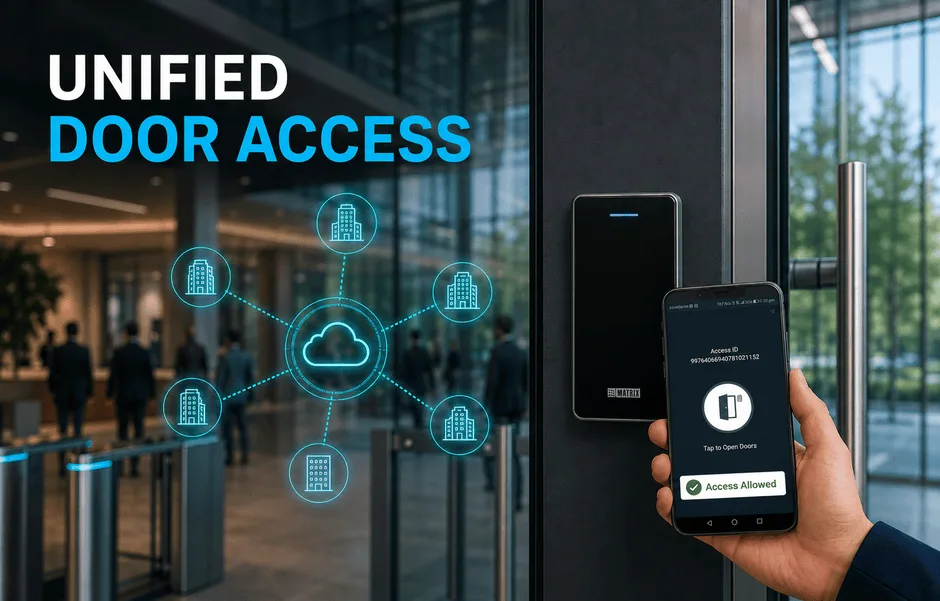
Managing safety across many sites is a hard job. Split systems create extra work and lead to costly mistakes. Manual data entry causes bad keys and payroll errors. Security risks grow when teams rely on split software. You need a unified way to stay safe.
A smart multi location Door access control system design is vital for growth. Many multi-location access control systems now offer one dashboard and access control and time attendance integration.
Every site acted alone. Data stayed in local files, making updates slow. Today, one hub sets rules for all doors. Reports are fast and exact.
Key Takeaways for Security Leaders
A unified door access control system setup cuts manual work and stops security gaps. It helps you stay compliant without the stress of site audits.
An enterprise physical access strategy lowers risk and supports scalable door access control solutions for business. This approach simplifies nationwide reporting and daily tasks. To grow safely, you must see how every part connects.
Why is Centralized Management the New Enterprise Standard?
Managing safety across many branches is a losing battle. Split systems create heavy workloads and safety gaps. Manual entry leads to active keys for former staff. Industry reports show that lost physical badges account for nearly 30% of security gaps in multi-location firms.
Old door access control systems trap data in site-specific files. This makes growing your business nearly impossible. Modern access systems fix this. They offer a unified hub for all your branches. You get deep access and time tracking sync in one place. This shift turns daily chaos into a clear workflow for your team.
Building a Central Entry Control
- Instant Control: Revoke user keys across all sites in seconds from one web dashboard.
- Better Safety: Remote control keeps your team safe during rapid staff changes.
- Audit Readiness: Central logs reduce compliance risks for HR and safety heads.
This unified door access control approach ensures your security works as hard as your business. Modern systems link door access with time tracking on a single platform. Many also connect with video and alarms for a better view. It is not just about locking doors; it is about smart data. Aligning your physical access management strategy is the first step toward control. This simplifies growth for any firm needing scalable solutions.
Designing for Scale: Key Components of a Unified Strategy
Managing safety across many branches feels like a losing battle. You likely deal with split hardware and manual data entry. These gaps put your assets and people at risk. Security studies show that moving to a central access system can reduce admin workloads by up to 50%.
A modern door access control system setup solves this by centralizing control. Use a hub-and-spoke setup to ensure every door follows one plan.
Simplifying Hardware Maintenance
Aligning your hardware reduces upkeep costs and simplifies training for your safety team.
The Role of Smart Hardware
Modern Door Access Control systems place smart chips near the door. Edge door controllers are the backbone of this shift.
- PoE door units draw power and data through a single cable. This reduces wiring cost for your business.
- Local decision-making lets controllers verify entries even during server outages.
- Encrypted communication between readers and controllers protects user keys.
Why is RBAC Essential?
Role-Based Access Control (RBAC) is a proven way to manage large user groups. Instead of assigning rights to staff one by one, you assign them to job roles.
- Define a role, such as Regional Manager.
- Assign specific doors and times to that role.
- Add new hires to the role for fast setup across locations.
Preparing Your Site to Expand
- Pay once, scale later: A modular setup lets you add new branches without replacing your central software. This prevents extra costs as you grow.
- Simplify your workflow: Linking door access with time tracking creates a single data stream. This cuts manual entry errors.
- Lower your total cost: Aligning your hardware now prevents expensive updates later. It is a smart way to simplify daily tasks.
Bridging the Gap: Access Control and Time-Attendance Integration
Managing payroll for multiple sites is often a struggle. Manual logs lead to errors and disputes. Buddy punching drains your budget through unearned wages. Using separate systems for door access control and attendance creates data silos that increase your workload.
Why Integrate Access and Attendance?
Unified Door Access Control Systems close these gaps. They integrate door logs directly to your tracking tools. When an employee scans a card, the system records it for both security and payroll.
- Stop Fraud: Biometric or mobile keys prevent staff from clocking in for others.
- Automate Records: Digital logs replace paper sheets and cut down on manual entry.
- Reduce Costs: A single platform for access and attendance lowers your training needs.
Saving Time and Payroll Cost
Aligning your strategy ensures one source of truth. It saves time and stops payroll leaks.
Operational Efficiency at Scale
Choosing a scalable door access control solution lets you manage safety and HR from one screen. It provides a unified plan that reduces risk.
- Automate Reporting: Sync entry logs with payroll to stop manual errors.
- Centralize Control: Manage every branch from a single dashboard.
- Ensure Compliance: Align work hours with local labor laws automatically.
Standardizing these tasks saves time for your HR and IT teams. It ensures your business stays secure and efficient.
Future-Proofing with Mobile Credentials and Zero-Trust
Managing physical keys or plastic cards across dozens of offices is a tough job. Lost cards create safety gaps. Card sharing undermines your entire multi-site security approach. These old authentication methods are slow, risky, and expensive.
Why Switch to Mobile?
Mobile keys using BLE or NFC tech turn smartphones into secure keys. This shift solves several key pain points:
- Instant Issuance: Send or revoke access remotely without mailing plastic cards.
- Enhanced Safety: Phones use biometrics or PINs. This makes them harder to steal than badges.
- Operational Savings: Cut the recurring cost of replacing lost cards.
Implementing Zero-Trust Physical Security
Modern strategy moves beyond the outer gate. By applying zero-trust rules, you ensure continuous checks for every entry point.
- Least-Privilege Access: Grant contractors entry only to specific zones for set times.
- Continuous Audit: Monitor real-time logs to detect unusual patterns.
- Identity Sync: Connect your door logs with your time systems.
Choosing a scalable access solution helps your safety grow as you expand. Matrix Comsec offers a unified door access control system that links hardware and software. This simplifies policy control across all your regional offices.
Navigating Regional Compliance and Infrastructure Challenges
Building a multi-site safety system is tough. You must manage different state laws and unstable internet links. Ignoring these local details leads to legal trouble and downtime. You need a door access control setup that stays functional even when the network fails.
How to Handle Privacy Laws?
States enforce strict data privacy rules. A single policy for every office often fails audits.
- Site-specific rules: Use systems that allow site-specific data rules.
- Alternative Credentials: Offer mobile badges or PINs where biometric use is restricted.
- Consent checks: Ensure your platform captures digital waivers before enrolling users.
Does Your Infrastructure Support Rural Sites?
Rural sites often suffer from poor network links. If the cloud goes offline, your doors must still work.
- Offline Controllers: Deploy hardware that caches permissions locally.
- PoE Connectivity: Use Power over Ethernet to simplify wiring.
- Local Buffering: Ensure events sync once the connection returns.
A comprehensive enterprise door access control guide prioritizes resilience. Matrix Comsec delivers a unified system combining safety and communication. We offer native access control and time attendance integration in one console. This simplifies compliance and workforce management across every location. Next, we will explore centralizing your management dashboard.
Security as a Strategic Differentiator
Is your safety strategy lagging? Static locks create bottlenecks. A modern setup transforms entry points into sources of data. This shift moves safety from a cost to a strategic asset.
- Audit your current multi-site lag today.
- Focus on OSDP-compliant, unified tools for better data protection.
Matrix Comsec delivers native door access control and time attendance integration. We provide an end-to-end stack that simplifies compliance across all branches. Secure your enterprise while optimizing your workforce management.
Conclusion
Managing security across many sites is often a headache. Fragmented systems create gaps and waste time. A unified door access control system setup fixes this. It links your security and workforce data into one simple console. Modern systems offer deep access and attendance sync. This reduces risk and stops payroll errors.
Strategic Site Defenses
- Central Control: Manage all branches from one dashboard.
- Better Uptime: Smart hardware keeps doors working during network drops.
- Lower Costs: Mobile keys remove the need for plastic cards.
- Easy Compliance: Smart policies help you meet local rules.
Building scalable door access solutions for business is your next step. It prevents expensive future repairs. This enterprise door access control guide shows how integrated platforms simplify management. Your security must work as hard as your business. Start by checking your current hardware today.
Frequently Asked Questions
Can I use my existing readers with a new unified system?
Yes, you can keep your hardware. Most multi-site systems use open controllers. These devices support standard protocols like OSDP or Wiegand. This allows you to upgrade your software without replacing every reader. Matrix Comsec offers flexible systems that link with old parts. This strategy protects your past investment while updating your safety tools across all locations.
How does centralized access control handle internet outages at a branch?
Modern edge door access control systems use local storage. They store user rules directly on the device. If the link to the server fails, the door still works. The controller makes local entry choices and saves all logs. Once the link returns, the system syncs this data. This ensures safety even in rural areas with poor network links.
Is cloud-based access control secure enough for financial institutions?
Cloud platforms are highly secure when designed with enterprise-grade standards. These Door access control systems utilize end-to-end encryption and regular security updates. They align with strict regulations like SOC2 or GDPR. Matrix Comsec emphasizes a unified stack that hardens the entire communication path. This design reduces the attack surface. It provides the robust protection required for sensitive banking and financial environments in 2026.
What is the typical ROI for integrating access control with time-attendance?
Enterprises see a full return on investment in 12 to 18 months. Syncing these systems cuts manual entry and reduces payroll leaks. You can automate shift schedules and compliance reports from one console. This integrated door access control system boosts workforce control and lowers costs. Matrix Comsec offers this deep integration natively. It simplifies admin workflows for multi-site firms.