
Paper logs are slow and unsafe. They provide zero real-time view of your site. Handwritten books create big safety gaps. They raise compliance risks during audits or fires. If a crisis occurs, searching through paper logs is a major risk.
A modern visitor management system solves these issues. It changes a boring chore into a smart safety asset.
Why switch to digital logs?
- Get rid of bad handwriting and entry errors.
- Meet safety rules and privacy laws.
- Send instant alerts to hosts when guests arrive.
- Keep clean, real-time audit trails for each site.
This upgrade helps you follow visitor management implementation best practices. You can link guest check-ins with your current security tools. Whether you manage a main office or a remote plant, digital logs give you full control. You can verify names and scan watchlists.
Going digital cuts admin costs while securing your outer wall. Let us see how these tools link with your access cards and cameras.
Why are Paper Registers Failing Your Security Strategy?
Is your front desk still using a paper clipboard? Old books are a weak link in your site defense. Anyone can read, change, or lose them. This manual way leaves gaps that a digital system must close.
The Hidden Cost of Manual Tracking
With paper logs, staff must check, file, and search pages by hand. As records grow, finding past visits gets slow and hard. During a fire or leak, you cannot know who is on-site in real time. That delay blocks fast exits in plants and offices.
Manual tracking fails modern standards because:
- Guest details are open to anyone at the front desk.
- Slow check-ins annoy key workers and clients.
- Bad writing and missing data make event reviews hard.
- Paper books are easily lost or torn in busy lobbies.
Replacing paper visitor logs with digital systems is now an essential standard, not a luxury. Research shows that this transition cuts front-desk check-in times by up to 60% and reduces manual errors to zero. Automated visitor check-in for industrial facilities supports faster, more accurate headcounts. Secure visitor tracking for B2B enterprises also keeps you aligned with audit laws. Digital tools bring speed, privacy, and better control.
Going digital reduces risk and makes your data easy to search. Following visitor management system best practices keeps your site safe and ready for card reader integration.
The Core Pillars of a Modern Visitor Management System
Safety begins before a guest arrives. Old sign-ins create long lines that slow your business. A digital platform turns this delay into a smooth, safe flow. By following visitor management system implementation best practices, you protect your doors while making visits pleasant.
In the past, paper logs were public and hard to read. Today, secure digital logs protect guest privacy. Instead of manual ID checks that invite errors, smart scans check names against watchlists.
How Pre-Registration Works
Hosts can invite guests via email or text before they arrive. This sends a QR code for touchless check-in.
The host sends an invite with site safety rules.
Guests sign a digital NDA or safety form.
The system creates a secure entry code.
Why Use Identity Checks and Watchlists?
Identity checks prove the person at your gate matches their invite. Kiosks scan IDs for quick proof. Auto watchlist checks block banned guests before they reach the lobby.
Self-Service Check-In for Busy Plants
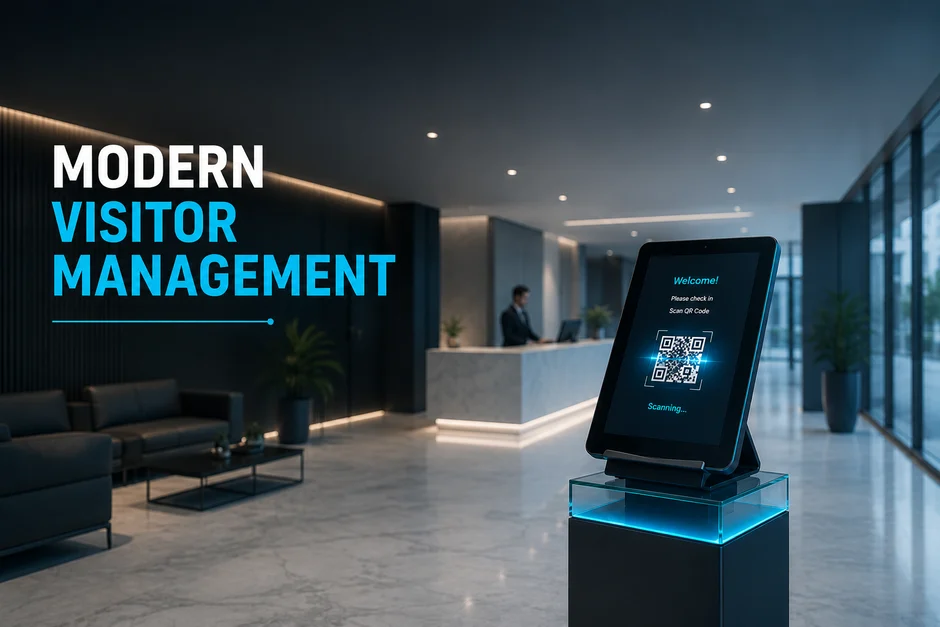
Kiosks ease the load on guards at large sites. These units provide automated visitor check-in for industrial facilities. Guests scan their codes, print badges, and alert hosts in seconds.
Traditional check-in leaves you blind once a guest leaves the lobby. An integrated system gives you real-time tracking through every door.
Scaling Your Site Access
A digital lobby scales easily as your firm grows. It cuts front desk costs while meeting safety laws. A quick check-in is just the first step. Next, we will see how these systems connect with your local hardware.
Integration: Connecting Visitors to Access Control and Surveillance
Paper logs stop at the front desk. They cannot block a guest from entering a private server room or factory floor. This lack of control creates security gaps. A modern visitor management system solves this. It links your lobby to your physical locks and cameras.
How Integrated Safety Works
- Check-in triggers a brief QR code or card.
- Access is limited to specific doors and times.
- Cameras tag check-ins to create a video trail.
In the past, guards had zero view of guests after they left the lobby. Today, an integrated setup offers real-time tracking through every door.
Ensuring Secure Visitor Tracking for B2B Enterprises
Ensuring secure visitor tracking for B2B enterprises is vital for compliance. In large plants, guests may wander into high-risk areas. Using automated visitor check-in for industrial facilities stops this by locking doors. If a guest tries to enter a closed room, the system alerts guards. This leaves a clear digital path for every guest. It makes audits simple and evacuation drills fast.
Alerts are the final piece. The system sends instant host notes via text, keeping your lobby clear.
Tightening Site Defenses
You reduce staff mistakes while boosting plant safety. You get precise control over who enters each room. Replacing paper visitor logs with digital systems standardizes these safeguards across all your sites.
Visitor Management System Implementation Best Practices
Many B2B firms run both main offices and remote plants. This makes replacing paper visitor logs with digital systems very useful. A visitor management system supports secure visitor tracking for B2B enterprises when planned well.
How Do You Scale Securely?
- Set clear guest rules so all sites follow the same policy.
- Use automated visitor check-in for industrial facilities to cut lobby lines.
- Apply top safety standards when designing your entry setup.
- Choose heavy-duty hardware built for constant use.
- Ensure devices can check guests offline during network drops.
Old setups relied on local, isolated paper logs with no shared view. Modern platforms use digital records and centralized dashboards to coordinate safety across different sites.
Centralized Safety Control
You get a clear view of guests across all offices and plants. A unified visitor management system reduces tool sprawl and support work. This makes your daily operations simpler and your audit trails stronger.
Strategic Security: Your Next Steps
How Do You Start?
Physical safety is a key advantage for modern firms. It should not be seen as a passive cost. Start by looking at your current lobby flow. Moving to a digital system ensures long-term safety.
- Audit your manual front desk tasks today.
- Focus on visitor management system implementation best practices.
- Choose unified, end-to-end security tools.
Hardening Your Site Today
A smart setup cuts risk while simplifying your work. Matrix Comsec offers scalable, hardware-linked platforms built for offices and plants. Contact our team to start your upgrade today.
Conclusion
Relying on paper books creates serious safety gaps. Replacing paper visitor logs with digital systems is the best way to secure your doors. A modern visitor management system gives you real-time visibility while protecting guest privacy. By following visitor management implementation best practices, you connect check-ins with card readers and cameras.
This unified setup protects corporate offices and remote plants. Setting up automated visitor check-in for industrial facilities reduces daily workload and strengthens your perimeter. Finally, secure visitor tracking for B2B enterprises ensures compliance at every site. Audit your front desk today and choose a unified platform to protect your growth.
Frequently Asked Questions
How does a visitor management system help during an evacuation?
The cloud log displays all guests on-site in real time. Safety teams can check names on phones at assembly points. Safety studies show that digital roll-calls during evacuations are 50% faster than manual paper lists.
Replacing paper logs with digital visitor management systems cuts the risk of missing names.
Can the system handle contractor management at manufacturing plants?
Yes, modern platforms support automated visitor check-in for industrial facilities and contracting crews. It tracks safety briefs, signed forms, and in-and-out times. The system blocks entry until the guest completes all safety steps. This supports visitor management implementation best practices for busy plants.
Is it possible to integrate visitor logs with my existing HR software?
Yes, most platforms use APIs to link with HR databases and doors. This keeps host lists current and triggers instant host alerts. It cuts manual data entry and reduces security errors. This setup supports secure visitor tracking for B2B enterprises with many sites.
What happens if the internet goes down at a remote facility?
The software works offline using local storage during network drops. Kiosks continue to check guests in and print entry badges. All data syncs to the cloud automatically when the link returns. This keeps your remote sites safe and running without pause.