
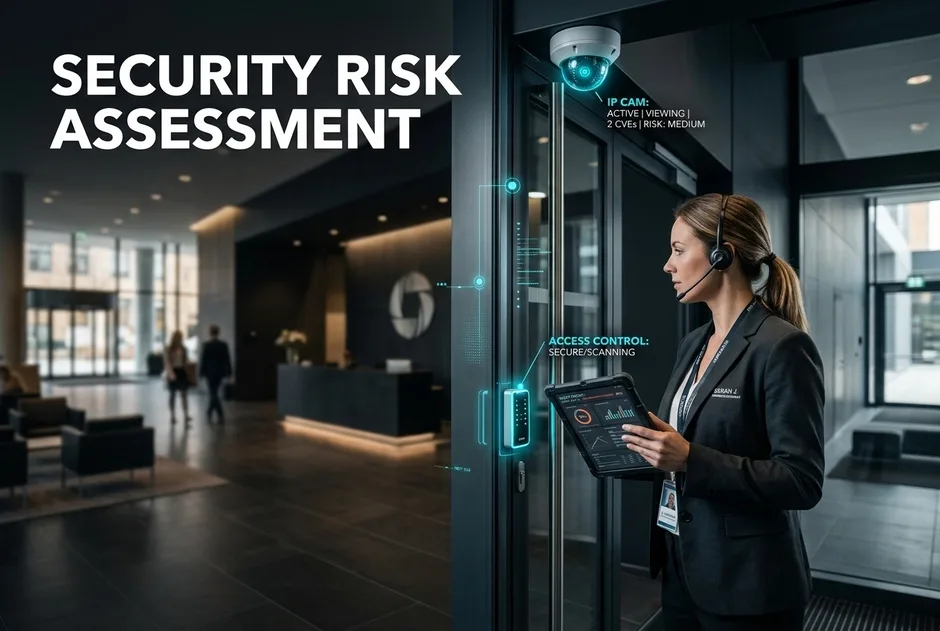
Many organizations rely on legacy, and disconnected security systems. They operate daily without knowing their actual risks. This approach works, but it does not think. It leaves your team blind to emerging threats.
Unidentified gaps in your defense lead to unauthorized access, operational downtime, and heavy compliance penalties. These vulnerabilities often result in severe financial losses. In 2026, modern threats are faster and more sophisticated than ever before. Relying on outdated security measures leaves your assets exposed to organized crime and digital breaches. A single breach can disrupt your entire supply chain.
A structured physical security risk assessment builds a proactive, cyber secure defense strategy. It moves your business from reactive firefighting to continuous protection. By analyzing your entire infrastructure, you can prioritize risks and allocate resources where they are needed most. This ensures you pay once and scale your security later.
Consider how traditional security compares to a modern, risk-aware approach:
- Old System: Disjointed tools, physical blind spots, and slow, reactive responses to incidents.
- Modern System: Unified visibility, proactive threat detection, and real time alerts.
What this means for you is simple. You can reduce risks, save time, and simplify nationwide operations. Implementing a modern vulnerability assessment framework allows your team to detect risks and verify incidents faster.
Are you ready to secure your space? Address your security weaknesses today to protect your people and property for tomorrow.
What is a security risk assessment, and why does it matter?
Many organizations only fix their defenses after a major breach occurs. This reactive approach is both costly and dangerous. A single security failure can halt your nationwide operations, damage your reputation, and inflate your total cost of ownership.
Learning how to conduct a security risk assessment is the first step toward proactive protection. This systematic process reviews, identifies, and mitigates vulnerabilities across your entire enterprise. It prioritizes your critical assets and stops incidents before they can occur. Protecting operational continuity and reducing long term costs always outweighs simple technical compliance.
The Difference Between Threat Audits and Risk Assessments
Understanding your security landscape requires knowing the tools at your disposal. Many leaders confuse threat audits with comprehensive risk assessments.
- Threat Audits: These audits focus primarily on external malicious actors and immediate security gaps. They show you who might attack and where your current entry points are vulnerable.
- Risk Assessments: These assessments provide a holistic analysis of how vulnerabilities impact long term business continuity. They look at the big picture, including environmental hazards and internal policies.
| Focus Area | Threat Audit | Risk Assessment |
| Primary Target | External actors and immediate gaps | Holistic business continuity |
| Analysis Depth | Surface level vulnerabilities | Deep operational impact |
| Outcome | Quick fixes for active threats | Long term resilience and planning |
What this means for you:
A threat audit tells you where the leaks are. A risk assessment helps you build a lasting vulnerability assessment framework to prevent future flooding.
Why Legacy Infrastructure Fails in 2026
Legacy infrastructure cannot withstand modern coordinated physical and cyber attacks. In 2026, threats are faster and more sophisticated than ever before. Outdated setups rely on disconnected hardware and manual monitoring. This leaves your organization exposed to severe operational disruptions.
Modern enterprises require security systems designed with built-in cyber resilience, not outdated add-ons. You need a system that thinks, not just one that works.
To secure your facilities, you must follow clear security risk assessment steps:
- Inventory your assets: Map all physical and digital resources.
- Evaluate the threats: Test how easily your systems can be compromised.
- Analyze the impact: Determine the financial and operational cost of a breach.
- Implement modern solutions: Deploy unified, smart systems that adapt to new risks.
What this means for you:
Upgrading your legacy systems prevents costly downtime. By choosing smart, integrated security solutions, you can pay once and scale your organization later.
What are the key types of security risk assessments?
Many organizations evaluate their security in isolated silos. They look at physical gates but ignore the network. They secure databases but forget about emergency policies.
This fragmented approach creates massive blind spots. In 2026, sophisticated threats exploit these exact gaps [1]. A single weak link can disrupt your entire business, halt productivity, and cause severe financial damage.
To build a strong defense, you must understand the different types of assessments. Unifying these evaluations under one framework reduces operational blind spots. It ensures that your physical and digital assets remain fully protected.
| Assessment Type | Primary Focus Area | Common Vulnerability | Modern Solution Baseline |
| Physical security | Barriers, access control points, and site visibility | Intruder access and poor camera visibility | Unified video security and biometric access control |
| IT assessment | Network integrity and system vulnerabilities | Network attack vectors and insecure digital infrastructure | AI assisted detection and continuous system monitoring |
| Data security | Database protection and integrity | Unauthorized data breaches and information theft | Secure encryption and data analytics platforms |
| Insider threats | Employee access levels and internal systems | Unauthorized internal access and lack of incident protocols | Strict access permissions and regular policy reviews |
| Environmental assessment | Facility readiness for extreme weather | Inadequate protection against severe weather damage | Smart sensors and rugged weather proof security cameras |
| Policy review | Emergency action plans and incident response protocols | Outdated response plans and lack of staff emergency training | Regular staff training programs and unified response playbooks |
How do legacy systems compare to modern solutions?
Legacy systems operate in silos. They rely on disconnected hardware and manual monitoring. Security teams must check multiple screens just to verify a single incident. This setup works, but it does not work.
When systems do not talk to each other, critical data gets lost. A modern, data-centric approach connects your cameras, alarms, and locks. This connection creates a seamless defense network.
Modern systems unify video surveillance and access control. They use artificial intelligence to detect unusual activity in real time. This integration allows your team to respond to threats faster and make informed decisions.
How to conduct a security risk assessment
Knowing how to conduct a security risk assessment is the first step toward lasting resilience. You must look at every entry point, network connection, and employee protocol. This structured approach helps you build a proactive strategy.
To protect your business, you must follow clear security risk assessment steps. This process ensures your defense scales with modern threats:
- Inventory assets: Map all physical and digital resources.
- Evaluate barriers: Check access control points and site visibility.
- Ensure network integrity: Protect databases and mitigate attack vectors.
- Analyze human factors: Review employee access levels and staff training.
- Assess facility readiness: Prepare for extreme weather and natural disasters.
- Implement unified systems: Deploy smart technology to close security gaps.
What this means for you:
A complete physical security risk assessment reveals hidden vulnerabilities. When you unify your audits, you save time, reduce risk, and simplify your operations.
Are you ready to secure your space? Explore Avigilon to unify your video security and access control today.
What should a comprehensive security audit process include?
Legacy security frameworks often fail to detect modern threats. A single blind spot can expose your entire enterprise to physical intrusion or digital breach. To protect your operations, you must understand how to conduct a security risk assessment that unifies all defenses.
A complete audit must pinpoint vulnerabilities across physical and digital spaces. It requires testing your hardware under real-world, always-on conditions. This process helps optimize your budget by directing funds to critical weaknesses.
The Role of Regulatory Compliance
Enterprise trust relies heavily on meeting strict regulatory standards. Aligning your infrastructure with NDAA, GDPR, SIRA, and BIS/STQC is non-negotiable. Non-certified hardware can lead to massive legal liabilities and severe data breaches.
| Old Compliance | Modern Compliance |
| Checking boxes once a year | Continuous, real-time tracking |
| Ignoring firmware vulnerabilities | Mandatory STQC and GDPR testing |
| High risk of regulatory fines | Secure, certified infrastructure |
Ensuring your hardware and software are certified protects your brand. For instance, BIS/STQC rules in India require robust cybersecurity for connected cameras. SIRA guidelines in Dubai mandate visible, high-definition recording. NDAA and GDPR standards protect network integrity and data privacy globally.
Following clear security risk assessment steps ensures you meet these diverse rules. Compliance is no longer just a legal burden. It is a powerful shield for your business.
What this means for you:
Certified systems prevent costly fines and secure your data. You build trust while keeping bad actors out.
Prioritizing Risks by Impact and Likelihood
You cannot secure everything at once. Trying to protect every asset with the same intensity wastes valuable resources. Instead, categorize your assets by threat likelihood and operational impact.
- High-impact, high-likelihood: Focus on critical entry points and key databases first.
- High-impact, low-likelihood: Secure backup power and disaster recovery systems.
- Low-impact, high-likelihood: Address minor physical damage or low-risk policy gaps.
This structured categorization lets you build tailored action plans. You address high-risk areas immediately, neutralizing threats before they escalate. It works, but it must think. Modern analytics help you see which assets face the most active pressure.
Testing existing hardware under actual operational stress is vital. If a camera fails in the dark, it is not a solution. Directing your budget to these verified gaps ensures maximum efficiency. Pay once, scale later.
What this means for you:
Smart risk prioritization saves time and money. You deploy defenses where they matter most, keeping your business resilient.
Are you ready to upgrade your security framework? Explore Avigilon to unify your physical security and access control today.
How do you conduct a security risk assessment?
Modern threats are changing fast. Legacy infrastructure and organized crime put your operations at risk. A single blind spot can halt your business overnight. Relying on outdated security methods leaves your organization vulnerable to massive financial damage.
Learning how to conduct a security risk assessment is the first step toward total resilience. A clear sequence ensures you do not miss any critical assets. Aligning technical audits with business continuity goals keeps your operations safe. Businesses across the nation must adapt to these shifting environments.
| Step | Phase Name | Core Action | Desired Business Outcome |
| 1 | Take Inventory of Assets | Create a database of physical and digital assets with risk levels and access permissions | Clear scope of vulnerable hardware and software |
| 2 | Identify and Evaluate Threats | Conduct penetration tests and evaluate security system visibility | Deeper understanding of active risks and vulnerabilities |
| 3 | Analyze Impact | Calculate financial and operational fallout of a compromise | Structured asset prioritization for targeted corrective action plans |
| 4 | Consider Measures | Discuss actionable and scalable solutions to address security gaps | Proactive mitigation strategy that enhances operational efficiency |
| 5 | Review Staff Training | Evaluate emergency response protocols and employee preparedness | Minimized human element risk and improved incident response |
| 6 | Implement Recommendations | Deploy unified systems like AI cameras and biometric access control | Enhanced situational awareness and immediate risk reduction |
| 7 | Continuously Observe Results | Monitor performance and publish regular targeted reports | Continuous improvement and long term protection of assets |
Steps 1 to 3: Inventory, Threat Identification, and Impact Analysis
To secure your business, you must know what you are protecting. The first phase of the security risk assessment steps focuses on gathering crucial data.
- Create an asset database: Document every physical and digital asset in your facility. Label them by asset type, location, and function. Define access permissions and compliance needs for each item.
- Evaluate active threats: Perform penetration tests on your high risk assets. Check the visibility of your commercial video security systems. Ensure your fire and cooling systems function perfectly.
- Analyze the business impact: Calculate the financial and operational fallout if a critical asset is compromised. Determine how long a disruption would last. Use this analysis to prioritize your security budget.
Every organization has unique assets. You must evaluate physical barriers, network entry points, and database integrity. Testing your commercial video security systems helps you spot blind spots before criminals do. If an intruder can bypass your front gate, your entire facility is at risk.
Old System vs. Modern System
- Old System: Security teams guess which assets are vulnerable. They react only after a breach occurs.
- Modern System: Teams use a centralized database. They proactively test systems before threats exploit them.
What this means for you:
Knowing your vulnerabilities prevents unexpected downtime. You can target your resources where they are needed most.
Steps 4 to 7: Mitigation, Training, Implementation, and Observation
Once you identify your gaps, you must take action to close them.
- Consider mitigation measures: Discuss scalable security systems that unify access control and video surveillance. Focus on proactive strategies that improve efficiency without slowing down daily work.
- Review staff training: Technology alone cannot keep you safe. Review employee emergency response protocols to minimize the human element risk. Prepared staff can easily limit damage during an incident.
- Implement recommendations: Deploy smart tools to secure your facility. Use AI assisted cameras to detect unusual activity. Install biometric access control to protect sensitive areas.
- Continuously observe results: Do not stop after installation. Monitor system performance and publish regular targeted reports to tweak solutions.
Security is a continuous cycle. Implementing recommendations is not a one time task. Evolving environmental risks and smart target strategies require constant vigilance. Regularly auditing your systems ensures your defenses remain strong against new threats.
Old System vs. Modern System
- Old System: Old systems rely on isolated cameras and manual locks that do not share data. Staff are unprepared for emergencies.
- Modern System: Modern platforms offer unified security with real time alerts. Well trained staff respond instantly to verified threats.
What this means for you:
A unified defense system reduces response times. You protect your people and property while simplifying your daily operations.
Are you ready to secure your facility? You can deploy smart, scalable tools today. Explore Avigilon products to build a unified physical security system that adapts to your needs.
What are the best practices for a successful security audit?
Static security plans quickly become obsolete as modern threats evolve. Relying on outdated checklists leaves your critical assets exposed to costly breaches. Knowing how to conduct a security risk assessment ensures your defenses remain proactive.
Consider these essential practices for your strategy:
- Schedule regular reviews: Conduct comprehensive audits annually or bi-annually to adapt to shifting risks.
- Define clear metrics: Establish measurable benchmarks for threat detection speed and incident response times.
- Consult the experts: Work with certified security professionals who understand end to end hardware and software integration.
Old Approach vs. Modern Approach
- Old Approach: Guessing vulnerability levels based on static, paper checklists.
- Modern Approach: Using a dynamic vulnerability assessment framework to prioritize real time risks.
What this means for you:
Following clear security risk assessment steps turns weaknesses into actionable defense plans. Explore Avigilon products to build a unified physical security system that protects your business.
Frequently Asked Questions
How often should businesses conduct a physical security risk assessment?
Most organizations should conduct a physical security risk assessment once or twice a year. If your business operates in a high risk environment, you may need more frequent evaluations. You should also run an assessment after major facility upgrades, staff changes, or security incidents. Regular reviews ensure your security measures match your current operational needs and resources. They also help your team stay prepared for new threats. Regular testing keeps your defenses strong.
How long does a security audit process take?
A security audit process can take anywhere from a few days to several months. The exact timeline depends heavily on the size of your organization and the complexity of your systems. Small businesses with simple digital networks often finish the process in under a week. Conversely, large enterprises with multiple physical locations and complex infrastructure require a much longer evaluation period to ensure accurate results. Thorough planning helps speed up this process.
Who is responsible for conducting security assessments?
Security leaders and executive managers are responsible for planning and overseeing security assessments. However, successful execution requires active participation from all employees across the company. Staff members must report daily vulnerabilities, while IT teams handle technical scans and software checks. Third party consultants can also provide unbiased external expertise to help identify hidden weaknesses that internal teams might miss. Everyone plays a vital role in keeping the organization safe.
Which industries benefit most from security risk assessments?
While all industries benefit from security risk assessments, some sectors have much higher stakes. Critical infrastructure, manufacturing, and multi location enterprises benefit the most from these evaluations. These fields face complex physical threats, high asset values, and strict regulatory rules. Regular assessments help them protect valuable physical assets, secure supply chains, and maintain public safety. Any business with physical assets can use these reviews to lower risk.
How much does a security risk assessment cost?
The cost of a security risk assessment varies widely. Your final price depends on your organization size, the total number of assets, and audit urgency. Small companies using internal resources might spend very little money. In contrast, large corporations hiring external firms for urgent audits can expect to pay thousands of dollars. Investing in an assessment now helps you avoid much larger financial losses from future security breaches. It is a smart financial move.
How Do You Turn Security Into a Strategic Asset?
Many organizations treat security as a passive cost center. However, waiting for a breach to happen ruins operations, damages trust, and costs fortunes.
- Old Security: Reactive, slow, and easily bypassed by modern threats.
- Modern Security: Proactive, integrated, and drives long-term operational continuity.
Knowing how to conduct a security risk assessment is the first step toward resilience. Follow these key security risk assessment steps to protect your organization:
- Map out all physical and digital assets.
- Analyze the impact of potential disruptions.
- Deploy scalable, smart security tools.
What This Means for You
Regular risk assessments deliver actionable solutions for long-term operational continuity. Do not wait for a crisis to test your defenses. Consult with enterprise security specialists today to evaluate your infrastructure and build a secure, compliant ecosystem.
Conclusion
Legacy security systems leave your organization blind to modern threats. Relying on disjointed tools leads to costly downtime and heavy compliance penalties. To protect your assets, you must move from reactive firefighting to proactive defense.
Learning how to conduct a security risk assessment is the first step. By following structured security risk assessment steps, you can identify hidden vulnerabilities. This process helps you build a strong vulnerability assessment framework. You can secure your physical facilities and digital assets under one unified system.
Do not wait for a costly breach to expose your weaknesses. Begin by mapping your assets and evaluating your current barriers. Analyze your risks based on their operational impact and likelihood. This allows you to allocate resources where they are needed most. You can pay once and scale your security later.
A modern physical security risk assessment ensures long-term resilience. It unifies your video surveillance and access control into a single network. This simplifies your nationwide operations and keeps your people safe. Are you ready to secure your space? Take action today to close your security gaps and protect your property for tomorrow.