
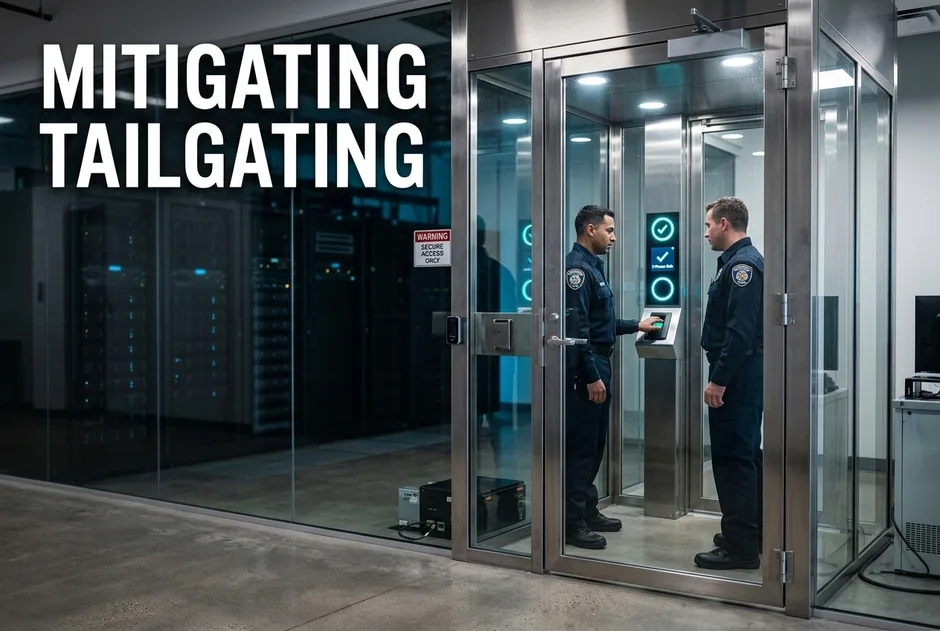
A polite gesture like holding a door open can bypass millions of dollars in digital defenses. This habit is called tailgating. It lets unauthorized people slip into secure zones without being seen. In 2026, one physical breach can cause major compliance failures under strict HIPAA or NERC CIP rules.
Relying on human watchfulness is no longer enough to protect your perimeter. Using physical tailgating prevention tools ensures only authorized staff get in. Modern facilities must use strict physical barriers to protect their most sensitive data and assets. Let us explore how these advanced security workflows create a strong first line of defense today.
In 2026, tailgating is still a major security risk. Human politeness easily bypasses electronic badges. Polite workers often hold doors open for colleagues. This allows unauthorized people to slip in undetected. These physical breaches often let hackers launch cyberattacks on local networks. This leads to major business disruptions. To solve this issue, firms must use more than simple badge readers. They need physical barriers that stop multi-person entry without relying on human behavior. This ensures they meet federal standards.
What are the real-world consequences of unauthorized entry?
One physical breach can stop operations and cause major financial damage. Across the United States, corporate spying, angry employees, and infrastructure breaches threaten firms. Unauthorized access can lead to stolen assets or hacked systems. Unlike complex platforms from Genetec, Matrix Comsec offers a unified, low-cost platform. This strong setup secures your facility without high setup costs. It reduces your operational risks.
Why do standard badge-in systems fail to stop tailgating?
Standard single-door readers rely entirely on user compliance. They check badges but cannot stop a second person from walking in. This makes passive systems highly ineffective.
To stop this threat, facilities need active tailgating prevention. Using mantrap door access control physically limits entry to one person at a time. It ensures true perimeter security and makes compliance audits simple.
What This Means for You
Do not let polite habits hurt your security. Matrix Comsec provides integrated, low-cost controls to keep unauthorized visitors out.
How Does Mantrap Door Access Control Solve the Tailgating Menace?
Standard doors struggle to block unauthorized followers. A mantrap door access control system solves this risk by using a physical two-door vestibule. Interlocking door logic keeps the second door locked until the first door closes and locks. This controlled process greatly improves tailgating prevention.
By using weight sensors, smart cameras, or other tools, the system checks that only one person is inside. If it finds more than one person, it locks both doors. Then, it alerts security staff. This setup is widely used for server room access control. It also secures other high-security spaces that must meet strict rules.
Instead of linking many different products, modern platforms manage these tasks in one place. They handle advanced security rules, monitoring, and reports on one controller. This reduces complexity and helps you audit multiple sites easily. Active physical enforcement reduces reliance on human behavior in high-risk zones.
How does interlocking door logic work in practice?
The entry process always follows a strict sequence:
- The user presents credentials at the first door.
- The first door unlocks, the user enters, and the door closes.
- The system scans the chamber. If clear, the second door unlocks.
If the system detects an unverified visitor or bad credential, it triggers a lockup. Both doors stay locked, holding the person in the vestibule. Meanwhile, the system alerts security.
What makes an enterprise-grade mantrap system reliable?
To avoid lockouts during busy times, use proven, highly reliable hardware. Interlocking logic should run on a dedicated controller, not fragile links. Unified management of doors, sensors, and alarms keeps policies consistent.
What This Means for You
A well-designed mantrap door access control setup simplifies deployment. It also supports 2-person rule security. This keeps your critical assets and server rooms better protected.
Next, we will explore how the crucial 2-person rule adds a powerful second layer of defense.
What is the 2-Person Rule and How Does It Protect High-Risk Areas?
The 2-person rule security protocol requires two authorized people to present credentials within a set timeframe to grant access. This policy reduces the risk of internal misuse, collusion, and forced entry in high-risk zones. By enforcing dual custody, firms ensure that no single person can access critical assets alone. This rule also supports strong tailgating prevention in sensitive facilities.
The access process often follows these steps:
- User A scans their security credential.
- User B scans their security credential.
- The system validates both and then unlocks the door.
This active physical enforcement can align with recognized security guidelines and local compliance standards. This requires proper design and auditing.
Why is the 2-person rule critical for server room access control?
Data centers face constant physical and digital threats. Traditional server room access control can struggle against insider collusion or physical force. Combining dual-authorization with strong identity checks, like biometrics or PINs, increases accountability in high-privilege areas.
Modern mantrap door access control can enforce that only verified users enter. They enter one or two at a time as policy requires. This supports tailgating prevention. It also helps protect racks, network gear, and backup media.
How do you configure dual-authorization policies without creating bottlenecks?
Rigid, hardware-limited systems often cause operational delays. Software-driven access controllers let administrators adjust rules based on risk, shifts, or business needs. This keeps operations moving while still enforcing 2-person rule security.
- Dynamic Schedules: Enforce dual custody during nights, weekends, or change windows.
- Threat-Level Integration: Tighten rules during incidents or raised alert levels.
- Role-Based Logic: Require a second person with a different role, such as a supervisor.
What This Means for You
You can secure your facility without slowing down your team. A well-integrated access control platform simplifies audits and policy reviews for critical sites. Next, we will discuss practical deployment strategies.
How Can U.S. Enterprises Implement These Controls While Staying Compliant?
How do you balance high security with employee throughput and safety?
U.S. enterprises often need to align with strict frameworks like NERC CIP, CJIS, and HIPAA [location-specific insights]. One proven approach is to combine mantrap door access control with strong identity checks. This reduces unauthorized entry and tailgating.
The risk is clear. Heavy security can slow shift changes, delay patient care, or disrupt production. Long queues and confusing flows also increase safety risks during emergencies.
Modern facilities address this with smart layout and process design:
- Use segmented shift changes in large plants and healthcare campuses [location-specific insights]. This spreads traffic over defined windows.
- Add mobile credentials, biometrics, or PINs based on local needs and rules [location-specific insights].
- Apply mantrap door access control at high‑risk zones to support tailgating prevention.
- Tune rules so frequent users move quickly, while visitors follow stricter checks.
A unified access platform can link these controls into one view. This helps security teams adjust policies and review events. It also supports compliance reviews without slowing daily work.
What should you look for in a compliant physical security partner?
Compliance audits demand clear, time‑stamped records of physical access. Your partner should understand major regulatory and data‑protection standards. They must also support risk‑based access policies.
When possible, choose a platform that:
- Delivers access control hardware, software, and controllers as one stack
- Supports policy‑based rules like 2-person rule security for server room access control
- Provides detailed logs for doors, alarms, and mantrap events
- Offers strong encryption and role‑based administration
What This Means for You
You gain a reliable, audit‑ready physical security posture with fewer integration gaps. Clear policies, strong tailgating prevention, and detailed records help protect critical assets. They also simplify compliance across your sites.
FAQs
Fire Alarm Integration
Yes, most enterprise-grade mantrap door access control systems integrate with building fire alarm systems. They typically use fail-safe hardware. This hardware unlocks doors when power is cut or when a fire alarm relay is triggered. This approach supports life safety rules. It also keeps strong physical security in place during normal operations.
Shift Change Workflows
Modern access control platforms can apply 2-person rule security based on schedules and zones. Administrators can define rules that adjust automatically during known busy periods. This reduces bottlenecks at secure points. It also keeps continuous protection for high-risk areas and critical workflows.
Tailgating vs Piggybacking
Tailgating happens when an unauthorized person follows an authorized user through a door without consent or awareness. Piggybacking involves an authorized user knowingly letting another person enter on their credential. Both behaviors defeat tailgating prevention controls. They also weaken the value of the access system.
Server Room Biometrics
Biometrics are not always required for server room access control, but they add strong identity assurance. Combining biometrics with cards or PINs creates multi-factor authentication. This helps prevent credential sharing. It also confirms that the person entering is the approved user.
Conclusion: Securing Your Perimeter with Confidence and Continuity
Implementing mantrap door access control and tailgating prevention transforms physical security into an active, strategic defense. These technologies ensure strict compliance with nationwide security regulations.
What This Means for You: Securing critical assets requires more than basic hardware. You need a unified, highly reliable architecture.
Audit your high-risk entry points today. Partner with Matrix Comsec to deploy integrated, policy-driven systems. These systems protect your perimeter with absolute confidence and operational continuity every single day.
Conclusion
Standard badge readers cannot stop tailgating. Polite employees frequently allow unauthorized individuals to enter. To protect high-risk areas, organizations must deploy physical barriers. Using mantrap door access control and the 2-person rule keeps assets safe. These systems prevent tailgating without relying on human compliance. They also make safety audits easy for server rooms. This protects your physical assets and sensitive data.
Do not let polite habits hurt your security. Your best next step is to audit your doors today. Partner with Matrix Comsec for a simple, compliant setup. Our systems secure your site with ease and confidence.